

Many investors rush into the market at 9:30 AM EST, only to get trapped by a deceptive price move. This common mistake often leads to unnecessary losses before the session truly finds its direction. Avoiding the fake-out is essential for anyone looking to capitalize on early volatility.
To master this environment, you must utilize a reliable 15-minute trading strategy. This approach focuses on the “Sweep & Reclaim” method, which helps you identify genuine momentum rather than reacting to noise. By waiting for the market to test and reject specific levels, you gain a massive edge over impulsive participants.
To automate these levels, you need TradingView Premium. This tool allows you to map out key zones before the bell rings, ensuring you remain calm while others panic. Implementing a disciplined NY open trading strategy will sharpen your execution speed and improve your overall decision-making accuracy. Preparation is the bridge between amateur mistakes and professional consistency.
Understanding the Dynamics of the New York Open
Mastering the first 15 minutes of the New York session requires deep insight into institutional behavior. This period represents one of the most liquid windows in global financial markets. Traders who develop a robust NY open trading strategy often find that these initial moments dictate the trend for the remainder of the morning.
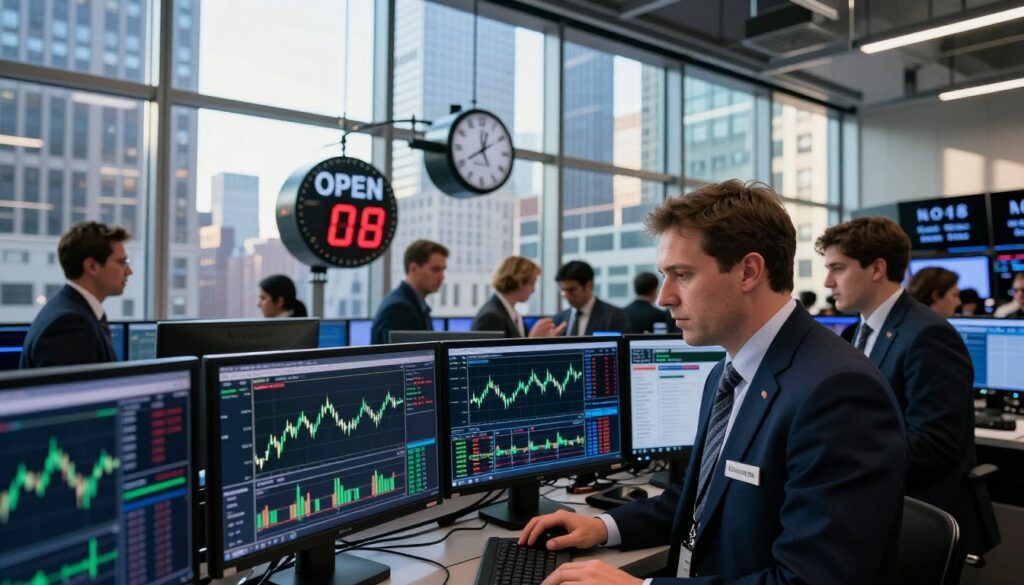
The rapid price swings observed during this time are primarily driven by institutional order flow. Large banks and hedge funds execute significant positions as soon as the market rings the opening bell. This heavy volume creates the volatility that defines the session’s early character.
Distinguishing between genuine breakouts and deceptive market noise is a core challenge for any trader. A well-planned NY open trading strategy helps filter out this noise by focusing on how overnight developments influence current price action. Global market correlations often provide the necessary context to interpret these early moves with greater accuracy.
By observing how international markets reacted during the Asian and European sessions, you can better anticipate the opening direction. Strategic preparation allows you to remain calm while others react emotionally to the sudden spikes in volume. Understanding these underlying dynamics is the key to maintaining consistency in a high-pressure environment.
Essential Charting Software for Precision Trading
Finding the best charting software is a foundational step for traders who require real-time data and advanced analytical tools to execute their strategies. During the high-volatility window of the New York Open, your platform must provide speed, reliability, and visual clarity to ensure you do not miss critical entry points.

TradingView Premium
Overview
TradingView Premium is a cloud-based platform favored by many for its accessibility and massive library of community-built indicators. It allows traders to monitor multiple markets simultaneously without needing a high-end desktop setup.
Pros
The platform offers superior cloud-based accessibility and a user-friendly interface. It supports a vast array of assets, making it ideal for cross-market analysis.
Cons
The primary drawback is the lack of direct broker execution for many global firms. Additionally, the cost of the premium tier can be high for beginners.
Features
Users gain access to second-based intervals, multiple chart layouts, and advanced alert systems. These features are vital for high-frequency setups during the opening bell.
MetaTrader 5
Overview
MetaTrader 5 remains a staple in the industry for its robust algorithmic trading capabilities. It is widely used by institutional and retail traders who prioritize direct broker integration.
Pros
This software provides lightning-fast execution and deep liquidity access. It is highly stable and supports complex automated trading scripts.
Cons
The interface feels dated compared to modern web-based alternatives. It also requires a more significant learning curve for those new to automated systems.
Features
Key features include a built-in economic calendar, advanced depth of market (DOM) views, and customizable algorithmic trading environments.
TrendSpider
Overview
TrendSpider provides automated technical analysis features that save time during fast-paced sessions. It is designed to remove human bias by using algorithmic pattern recognition.
Pros
The platform excels at automated trendline detection and multi-timeframe analysis. It significantly reduces the time spent manually drawing charts.
Cons
The automated nature of the tools can sometimes lead to over-reliance on software signals. It also has a steeper subscription cost for its advanced features.
Features
It offers dynamic price alerts, strategy backtesting, and rain-drop charts. These tools help traders identify liquidity sweeps with greater precision.
| Platform | Best For | Key Strength | Execution |
|---|---|---|---|
| TradingView Premium | Visual Analysis | Cloud Accessibility | Limited |
| MetaTrader 5 | Algo Trading | Broker Integration | Excellent |
| TrendSpider | Automation | Pattern Recognition | Moderate |
Selecting the best charting software depends on your specific trading style and technical requirements. While tradingview premium offers unmatched flexibility for visual analysis, platforms like MetaTrader 5 provide the raw execution power needed for professional-grade trading.
The Core Components of a 15-Minute Trading Strategy
A disciplined 15-minute trading strategy hinges on the careful balance of liquidity, volume, and timing. By focusing on these specific elements, traders can navigate the intense volatility of the New York open with greater confidence.
This approach moves beyond simple price action to reveal the underlying mechanics of institutional order flow. Implementing these components helps maintain consistency during the most active part of the trading day.
Identifying Liquidity Sweeps
Liquidity sweeps occur when price probes previous session highs or lows to trigger stop orders. This movement often traps retail traders before the market reverses in the opposite direction.
Recognizing these false breakouts is a vital part of any 15-minute trading strategy. When you spot a rapid price spike followed by an immediate rejection, you are likely witnessing a liquidity sweep in action.
Utilizing Volume Profiles
Volume profiles provide a visual roadmap of where institutional interest is concentrated. By analyzing these levels, you can identify high-conviction zones that act as significant support or resistance.
This data allows you to filter out noise and focus on areas where large players are actively participating. Integrating volume analysis ensures your 15-minute trading strategy remains aligned with the broader market trend.
Setting Time-Based Filters
The first few minutes of the market open are notorious for erratic price swings, often called the “whipsaw” effect. Setting strict time-based filters helps you avoid these unpredictable initial movements.
Many successful traders wait for the first 15 minutes to conclude before entering a position. This patience allows the market to establish a clearer direction, reducing the risk of being stopped out by early volatility.
| Component | Primary Goal | Market Impact |
|---|---|---|
| Liquidity Sweeps | Identify Traps | High Volatility |
| Volume Profiles | Find Value Areas | Institutional Support |
| Time Filters | Reduce Noise | Improved Precision |
Configuring Your Chart Setup for the NY Open
A cluttered chart is the enemy of fast, decisive trading during the opening minutes. When the New York session begins, volatility spikes and price action moves with unprecedented speed. You must configure your workspace to filter out market noise and highlight only the most actionable data.
Proper chart configuration is essential for maintaining focus and reducing cognitive load. By streamlining your visual interface, you ensure that your brain processes critical information without being distracted by unnecessary indicators or overlapping data points.
Timeframe Synchronization
Effective trading requires a multi-dimensional view of the market. You should synchronize your primary 15-minute chart with higher-level timeframes, such as the one-hour or four-hour charts, to maintain proper context.
This alignment helps you identify the broader trend while you focus on the immediate price action. If your 15-minute setup contradicts the higher-level trend, you are likely trading against the path of least resistance. Always ensure your charts are linked so that cross-referencing happens in real-time.
Indicator Overlay Requirements
Many traders fall into the trap of over-complicating their screens with too many indicators. You should prioritize tools that provide clear, objective signals rather than those that create visual clutter.
Focus on essential overlays like volume profiles or moving averages that serve a specific purpose in your strategy. If an indicator does not directly contribute to your entry or exit criteria, remove it immediately. A clean workspace allows for faster reaction times when the market opens.
Color Coding and Visual Clarity
Visual cues are vital when you need to make split-second decisions. By using a consistent color-coding system, you can instantly distinguish between support levels, resistance zones, and liquidity sweeps.
For example, assign a specific color to your high-volume nodes and another to your daily open levels. This visual hierarchy helps you categorize price levels at a glance. When your eyes can quickly map the chart, your ability to execute trades under pressure improves significantly.
| Feature | Minimalist Setup | Advanced Setup |
|---|---|---|
| Indicator Count | 1-2 Indicators | 4-6 Indicators |
| Timeframe Focus | 15m Only | Multi-Timeframe |
| Visual Style | High Contrast | Custom Themes |
| Primary Goal | Speed of Execution | Deep Data Analysis |
Executing the NY Open Trading Strategy
Execution represents the final bridge between your market analysis and actual financial results. A disciplined approach is necessary to transform your observations into a profitable NY open trading strategy. By maintaining focus during the first few minutes of the session, you can capitalize on high-probability setups while minimizing emotional errors.
Defining Entry Triggers
Your entry triggers serve as the definitive signal to commit capital to the market. Traders often look for specific candlestick patterns, such as engulfing bars or pin bars, that form near key liquidity levels. Alternatively, a breakout confirmation above or below the initial 15-minute range can provide a strong signal for a directional move.
Consistency is the hallmark of a successful NY open trading strategy. Ensure that your chosen trigger aligns with the volume profile data you have gathered. Waiting for a candle to close before entering helps filter out the noise caused by rapid price fluctuations.
Managing Stop Loss Placement
Volatility during the market open is notoriously high, which makes stop loss placement a delicate task. If your stop is placed too tightly, you risk being stopped out by a minor liquidity sweep before the price moves in your intended direction. It is often safer to place stops behind the most recent swing high or low.
Consider using a volatility-based buffer to account for the aggressive price action typical of this session. Protecting your capital is the primary goal of any NY open trading strategy. By giving your trade enough room to breathe, you increase the likelihood of capturing the full move.
Calculating Take Profit Targets
Calculating your exit points requires an understanding of the expected range for the initial 15-minute price expansion. Many traders use Fibonacci extensions or previous day support and resistance levels to set realistic targets. These levels provide clear areas where institutional interest may cause a reversal.
You should aim for a risk-to-reward ratio that justifies the inherent risks of trading the open. As the price approaches your target, consider scaling out of your position to lock in gains. This systematic approach ensures that your NY open trading strategy remains robust regardless of short-term market turbulence.
Risk Management Protocols for High-Volatility Sessions
Navigating the New York open requires more than just a sharp eye for charts; it demands a robust defense for your capital. When the market experiences rapid price fluctuations, the risk of significant loss increases exponentially. Traders must implement strict protocols to ensure that a single bad trade does not compromise their entire account balance.
Position Sizing Techniques
Effective position sizing is the cornerstone of capital preservation. During the first 15 minutes of the session, volatility often spikes, which can lead to wider stop-loss requirements. You should adjust your position size downward to account for this increased range, ensuring your dollar risk remains constant.
Never allow a single trade to exceed a predetermined percentage of your total equity. By keeping your exposure small, you maintain the ability to trade another day even if the market moves against your initial thesis. Consistency in sizing prevents emotional decision-making when the market turns erratic.
Managing Trade Drawdowns
Even the most experienced traders face periods of consecutive losses. Managing drawdowns requires a clear, pre-defined set of rules that dictate when to stop trading for the day. If you hit a specific loss threshold, it is often best to step away from the screens entirely.
This approach prevents the common trap of “revenge trading,” where a trader attempts to recover losses by taking impulsive, high-risk positions. Recognizing when the market environment has become too unfavorable is a sign of professional maturity. Protecting your mental state is just as important as protecting your financial balance.
Psychological Discipline During Market Open
The first 15 minutes of the New York session can be overwhelming due to the sheer speed of price action. Maintaining psychological discipline is essential to remain objective and avoid reacting to market noise. You must stick to your strategy rather than chasing sudden, high-volume breakouts.
Deep breathing and a focused mindset help keep your emotions in check during these intense periods. When you feel your heart rate rising or your focus drifting, take a moment to reset. A calm, detached perspective allows you to execute your plan with the precision required for success.
| Risk Metric | Conservative Approach | Aggressive Approach |
|---|---|---|
| Max Daily Loss | 1.0% of Account | 2.5% of Account |
| Position Size | Fixed Dollar Risk | Variable Volatility Risk |
| Stop Loss Logic | Technical Structure | Fixed Tick Distance |
Common Pitfalls to Avoid During the First 15 Minutes
Even the most seasoned traders often struggle during the high-octane opening minutes of the New York session. The market environment during this window is exceptionally volatile, often leading to impulsive decisions. Recognizing these traps is the first step toward maintaining long-term consistency.
Over-Leveraging on Initial Volatility
Many traders feel the urge to maximize gains by using excessive leverage when the market first opens. This approach is highly dangerous because price swings can be erratic and unpredictable. If the market moves against your position, a large size can lead to rapid account depletion before you even have a chance to react.
Ignoring Macroeconomic News Releases
Scheduled economic reports often drop shortly after the market opens, creating sudden shifts in sentiment. Traders who ignore these releases frequently find themselves on the wrong side of a violent price reversal. Always check your economic calendar to ensure you are not entering a trade right before a major data announcement.
Chasing False Breakouts
The opening minutes are notorious for creating traps where price breaks a level only to snap back immediately. Patience is your best defense against these false breakouts. Waiting for a clear confirmation or a retest of the level can save you from unnecessary losses and improve your overall win rate.
| Common Pitfall | Primary Risk | Recommended Action |
|---|---|---|
| Over-Leveraging | Rapid Account Loss | Reduce Position Size |
| Ignoring News | Sudden Reversals | Check Economic Calendar |
| Chasing Breakouts | False Signal Traps | Wait for Confirmation |
Backtesting Your Strategy for Consistent Results
A robust 15-minute trading strategy requires rigorous testing against past market data before you risk real capital. Without empirical evidence, you are merely guessing rather than executing a professional plan. Backtesting allows you to verify that your approach holds a genuine statistical edge in the volatile New York opening session.
Data Collection Methods
To build a reliable dataset, you must record every trade execution from historical charts. Many traders use platforms like TradingView or Excel to log entry times, price levels, and exit conditions. Consistency is key when gathering this information, as incomplete data leads to flawed conclusions about your 15-minute trading strategy.
Analyzing Win-Loss Ratios
Once you have collected sufficient data, calculate your win-loss ratio to determine the viability of your system. This metric reveals how often your setup results in a profit versus a loss. Understanding your expectancy helps you manage expectations and maintain psychological discipline during live market hours.
| Metric | Target Goal | Importance |
|---|---|---|
| Win Rate | Above 50% | High |
| Risk/Reward | 1:2 or better | Critical |
| Max Drawdown | Under 10% | Essential |
Refining Strategy Parameters
After reviewing your performance metrics, you may find that your 15-minute trading strategy needs minor adjustments. You might need to tighten your stop-loss placement or shift your profit targets to better align with market volatility. Continuous refinement based on historical evidence ensures that your system remains effective as market conditions evolve over time.
Conclusion
Success in the financial markets relies on a blend of technical preparation, disciplined risk management, and rigorous backtesting. Traders who focus on the 15-minute timeframe gain a clearer view of early session volatility.
Tools like TradingView and MetaTrader 5 provide the necessary infrastructure to execute your plan with precision. You build confidence by applying these principles to your daily routine.
Consistent performance stems from executing a well-defined strategy rather than guessing market direction. Patience remains your greatest asset when navigating the opening bell.
Review your trade logs to refine your approach over time. Small adjustments to your entry triggers or position sizing often lead to better long-term outcomes. Stay committed to your process to achieve your goals in the competitive trading landscape.