

Stepping into the financial markets often feels like navigating a vast, uncharted ocean. Many newcomers find themselves overwhelmed by the sheer volume of data, yet the secret to success lies in visual interpretation. Learning how to read trading charts is the foundational skill that separates successful investors from those who rely on mere guesswork.
By embracing technical analysis for beginners, you gain the power to transform raw numbers into a clear roadmap. This approach allows you to move past emotional impulses and embrace a disciplined, data-driven strategy. When you master these visual patterns, you stop reacting to market noise and start anticipating potential movements with confidence.
This guide serves as your gateway to financial clarity. We will demystify complex indicators and provide you with the tools needed to navigate price action effectively. Prepare to sharpen your perspective and take control of your investment journey today.
Understanding the Basics of Trading Charts
Trading charts serve as the heartbeat of the financial world, pulsing with information for those who know how to look. By transforming raw data into a visual story, these tools act as a universal language for market participants across the globe. Learning how to read trading charts is the first step toward gaining true clarity in any financial environment.
What Are Trading Charts?
At their core, trading charts are the visual representation of price history over a specific period. They plot the movement of assets, allowing traders to identify patterns that repeat over time. Seeing the market unfold in this way helps you move beyond guesswork and into the realm of informed decision-making.
Importance of Trading Charts in Trading
Understanding these charts is essential because they provide a vital historical context that informs future market predictions. When you analyze past performance, you gain the ability to manage risk with much greater precision. Mastering these basics builds the confidence necessary to navigate complex financial landscapes with ease and focus.
Types of Trading Charts
There is no single way to view the market, as different styles cater to different trading personalities. From simple lines that track closing prices to complex structures that reveal market sentiment, the variety is vast. Choosing the right format is a key part of learning how to read trading charts to suit your unique strategy.
Types of Trading Charts Explained
Your path to financial clarity starts with understanding the unique language of trading charts. Whether you are a novice or an experienced investor, selecting the right visual tool is essential for effective technical analysis for beginners. Each chart type offers a distinct perspective on market activity, allowing you to tailor your approach to your personal trading style.
Line Charts
Line charts are the most basic form of price visualization. They connect a series of data points, typically closing prices, with a single continuous line. This simplicity makes them perfect for identifying long-term trends without the distraction of minor price fluctuations.
Bar Charts
Bar charts provide more depth by displaying the Open, High, Low, and Close (OHLC) prices for a specific period. Each bar represents a single timeframe, offering a clear view of price volatility. Traders often use these to spot potential reversals or momentum shifts within the market.
Candlestick Charts
Candlestick charts are the gold standard for many professionals. They use color-coded bodies to show whether the price closed higher or lower than it opened. By mastering these patterns, you gain a powerful advantage in predicting future price movements.
Comparison of Chart Types
Choosing between these formats depends on your specific goals. While line charts offer a clean overview, bar and candlestick charts provide the granular detail necessary for active trading. As you continue your journey in technical analysis for beginners, experiment with each type to see which one aligns best with your decision-making process.
Key Components of Trading Charts
Every successful trader knows that the secret to market success lies in decoding the fundamental pillars of price, time, and volume. These three elements act as the heartbeat of the market, revealing the collective story of human emotion and economic intent. By mastering these basics, you gain the vision needed to navigate complex financial landscapes with confidence.
Prices, Timeframes, and Volume
Price represents the current value of an asset, while the timeframe dictates the scope of your analysis. When you combine these with volume, you see the true strength behind a market move. High volume confirms that a price change is backed by significant conviction from market participants.
Support and Resistance Levels
Market sentiment often hits invisible walls known as support and resistance. These levels act as psychological barriers where buying and selling pressure frequently collide. When price approaches these zones, traders watch closely to see if the trend will continue or reverse.
Identifying these areas is a vital skill for any serious investor. By recognizing where support and resistance levels exist, you can better anticipate potential turning points in the market. This foresight allows you to manage your risk more effectively while seeking profitable opportunities.
Trendlines and Channels
Drawing accurate trendlines helps you visualize the overall direction of the market with incredible clarity. A trendline connects a series of price points, acting as a dynamic boundary for price action. When you connect these lines, you create channels that define the upper and lower limits of a trend.
These tools provide a roadmap for your trading journey. By observing how price interacts with these boundaries, you can stay aligned with the prevailing market momentum. Consistent practice in drawing these lines will sharpen your ability to spot emerging trends before they become obvious to everyone else.
Interpreting Candlestick Patterns
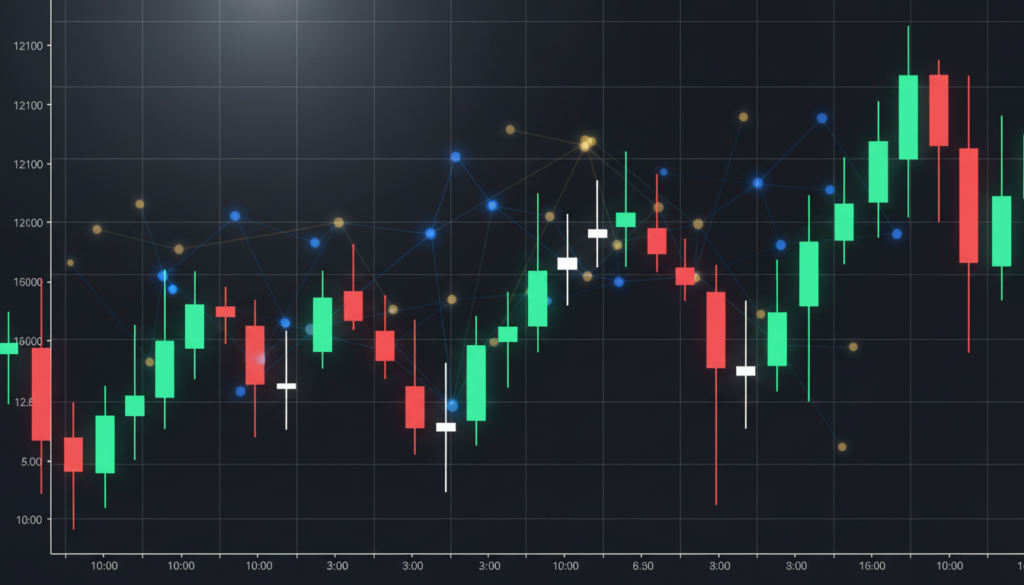
The battle between buyers and sellers is perfectly captured through the lens of candlestick patterns. These visual formations act as a bridge between raw price data and human psychology. By learning to read these shapes, you gain the power to anticipate market shifts before they fully manifest.
Major Candlestick Patterns
Several formations stand out as essential tools for any trader. The Doji, for instance, signals market indecision, often appearing at the end of a strong trend. Meanwhile, the Hammer suggests that a price floor has been reached, indicating a potential bounce.
Another powerful formation is the Engulfing pattern. This occurs when a larger candle completely swallows the previous one, signaling a strong shift in momentum. Recognizing these chart patterns early can be the difference between a missed opportunity and a profitable trade.
Bullish vs. Bearish Candlestick Patterns
Categorizing these signals is vital for your success. Bullish patterns, such as the Morning Star, suggest that buyers are regaining control and prices may rise. These formations provide the confidence needed to enter a long position.
Conversely, bearish patterns like the Evening Star warn that sellers are taking charge. When you spot these, it is often a sign to protect your capital or consider a short position. Mastering this distinction allows you to align your strategy with the current market flow.
How to Use Candlestick Patterns
To use these tools effectively, you must look for confirmation. Never rely on a single candle in isolation; instead, observe the surrounding price action. Patience is your greatest asset when waiting for the right signal to emerge.
Combine these insights with your overall trading plan to refine your entries and exits. By consistently applying your knowledge of chart patterns, you transform complex data into actionable trading signals. This journey of discovery empowers you to navigate the markets with newfound clarity and purpose.
Analyzing Trends in Trading Charts
Trends act as the heartbeat of the financial markets, guiding your decisions with clarity and purpose. When you learn to follow the dominant momentum, you move from guessing to strategic execution. This skill is truly a transformative journey for any market participant.
Identifying Uptrends and Downtrends
An uptrend is defined by a series of higher highs and higher lows, signaling that buyers are in control. Conversely, a downtrend reveals lower highs and lower lows, showing that sellers are driving the price downward. Observing these structures allows you to align your trades with the path of least resistance.
The Role of Market Trends
Market trends provide the essential context needed to filter out daily noise. By focusing on the broader direction, you avoid the trap of reacting to minor price fluctuations that lack substance. Trading in harmony with the trend significantly increases your probability of success over the long term.
Recognizing Trend Reversal Points
Spotting the end of a trend is just as vital as identifying its start. You can often detect early warning signs by watching how price interacts with key support and resistance levels. When momentum begins to fade, specific candlestick patterns often emerge to signal a potential shift in sentiment.
Learning to interpret these visual cues helps you exit positions before a reversal gains steam. By staying vigilant, you protect your capital and position yourself to capture the next big move. Mastering this foresight is what separates consistent traders from the rest of the crowd.
Utilizing Technical Indicators
Technical indicators serve as your compass in the vast and often turbulent ocean of financial markets. These mathematical tools act as filters that help smooth out price volatility and highlight potential entry points. By applying these to your charts, you move from basic observation to sophisticated, data-driven decision-making.
Moving Averages
Moving averages are essential trading indicators that help you identify the direction of a trend. By calculating the average price over a specific period, they filter out short-term noise. This allows you to see the underlying market momentum with much greater clarity.
Relative Strength Index (RSI)
The Relative Strength Index, or RSI, measures the speed and change of price movements. It helps you determine if an asset is overbought or oversold. When you pair this with other tools like the RSI MACD, you gain a deeper perspective on whether a trend has enough strength to continue.
Bollinger Bands
Bollinger Bands provide a visual representation of market volatility. They consist of a middle band and two outer bands that expand and contract based on price action. Traders often use these to spot potential breakouts or reversals when prices touch the outer limits.
Combining Indicators for Better Analysis
Success in the markets rarely comes from relying on a single tool. By combining trading indicators, you create a robust system that confirms your trade setups with higher statistical probability. Integrating the RSI MACD alongside moving averages allows you to build a comprehensive toolkit for your analysis. Trust your process and let these indicators guide your path toward consistent results.
The Importance of Timeframes
Your choice of timeframe acts as a lens through which you view the heartbeat of the market. The interval you select can drastically change your interpretation of market health and potential profitability. Finding your ideal rhythm is the first step toward building a sustainable career in the financial markets.
Day Trading vs. Swing Trading
Day trading requires a fast-paced approach where you capitalize on small price movements within a single session. Traders in this space often rely on minute-by-minute data to make split-second decisions. Speed and precision are the hallmarks of this high-intensity style.
In contrast, swing trading offers a more patient path for those who prefer to hold positions over several days or weeks. This method allows you to capture larger market moves while avoiding the noise of daily fluctuations. It is a rewarding journey for traders who value analysis over constant screen time.
Short-term vs. Long-term Analysis
Short-term analysis is perfect for scalpers who aim to profit from rapid market shifts. By focusing on tight time intervals, you can identify quick opportunities that vanish in minutes. This approach demands intense focus and a disciplined mindset to manage risks effectively.
Long-term analysis shifts your perspective toward the broader market structure. By looking at daily or weekly charts, you can identify major trends that define the market’s direction. Patience is your greatest ally when you are following these larger, more stable patterns.
Adjusting Timeframes for Strategy
Whether you are focused on scalping or trend following, adjusting your timeframe is vital for success. You must ensure that your chosen interval aligns with your personal goals and risk tolerance. A strategy that works on a five-minute chart may fail completely on a daily chart.
Mastering forex chart reading across various time intervals ensures your strategy remains consistent regardless of market conditions. By zooming in and out, you gain a holistic view of price action. Always remember that your ability to adapt your timeframe is what separates the amateurs from the professionals.
Volume Analysis in Trading Charts
Price tells you where the market is going, but volume tells you how much conviction is behind that move. Volume acts as the fuel that powers price trends, providing the necessary confirmation for any technical breakout or reversal. By observing the number of shares or contracts traded, you can distinguish between genuine market shifts and mere noise.

Understanding Trading Volume
Trading volume represents the total amount of activity within a specific timeframe. High volume indicates strong interest from market participants, which often validates the current price direction. Conversely, low volume suggests a lack of conviction, making price spikes susceptible to sudden reversals.
Monitoring liquidity is essential to ensure you are not misled by artificial price movements. When you see a significant price change accompanied by heavy volume, you can trust that the move is backed by institutional support. This clarity helps you avoid traps set by low-liquidity environments.
Volume Indicators
Traders often use specialized tools to visualize this data more effectively. While volume bars at the bottom of your chart provide a raw look at activity, combining them with other metrics creates a more robust strategy. For instance, you might pair volume data with the RSI to identify overbought or oversold conditions.
Integrating the MACD allows you to see how momentum shifts alongside changes in trading activity. These indicators work in harmony to provide a holistic view of market health. By layering these tools, you gain a deeper understanding of when to enter or exit a position with confidence.
Volume and Price Relationship
The relationship between price and volume is the cornerstone of successful technical analysis. When prices rise on increasing volume, it signals a healthy, sustainable uptrend. If prices rise while volume declines, it often serves as a warning that the trend is losing steam.
You can use the RSI to confirm if a price breakout is supported by enough momentum to continue. Similarly, the MACD helps verify if the trend has enough strength to sustain its current path. Mastering these relationships empowers you to trade with greater precision and inspiration in any market condition.
Common Mistakes to Avoid
Success in the financial markets is often defined by what you choose to avoid rather than what you do. Even the most skilled traders can fall into traps if they lose sight of fundamental discipline. By keeping your process clean and focused, you build resilience against common psychological pitfalls.
Ignoring Market News
Many traders focus exclusively on technical data while neglecting the broader economic landscape. However, major news events can trigger sudden volatility that renders your technical setup irrelevant. Always stay informed about scheduled economic releases to protect your capital from unexpected market shifts.
Overcomplicating Analysis
It is tempting to add every available indicator to your screen in search of the perfect signal. This often leads to “analysis paralysis,” where conflicting data points prevent you from making a clear decision. Keep your workspace simple and rely on a few proven chart patterns to guide your entries and exits.
Failing to Stick to a Strategy
The greatest challenge occurs when the market moves against your initial thesis. You might feel the urge to abandon your plan when chart patterns seem to contradict your expectations. True mastery comes from trusting your established rules rather than reacting to short-term emotional impulses.
Consistency is the bedrock of long-term growth. When you remain disciplined, you avoid the erratic behavior that leads to unnecessary losses. Stay committed to your strategy, and you will find that your ability to read the market improves significantly over time.
Developing a Trading Strategy
Transforming your trading from a simple hobby into a professional business starts with a clear roadmap. A well-defined strategy acts as your compass, guiding you through the volatile waves of the financial markets. By moving away from impulsive decisions, you create a repeatable process that fosters long-term growth.
Identifying Trading Goals
Every successful journey begins with a clear destination in mind. You must define what you want to achieve, whether it is supplemental income or building a retirement nest egg. Aligning your trading style with your personal financial goals ensures that you remain motivated even during challenging market cycles.
Backtesting Your Strategy
Before you commit your hard-earned capital, you must verify that your ideas actually work. Backtesting allows you to apply your strategy to historical data to see how it would have performed in the past. This crucial step builds the confidence needed to execute your trades without hesitation when real money is on the line.
The Importance of Risk Management
Protecting your account balance is the most vital skill any trader can master. Even the most sophisticated system will fail if you do not manage your exposure to loss. You should always look for clear support and resistance levels to determine where to place your stop-loss orders.
By maintaining a disciplined approach to risk, you ensure that no single trade can jeopardize your entire career. Remember that preserving your capital is just as important as finding profitable opportunities. When you treat trading as a professional business, you gain the consistency required to thrive in any market environment.
Tools and Software for Trading Charts
Elevate your trading game by equipping yourself with professional-grade analysis software. Having the right technology at your fingertips can significantly enhance your efficiency and accuracy in the markets. By building a high-performance workspace, you create a foundation that supports your unique analytical style and long-term goals.
Recommended Charting Software
Several platforms stand out in the industry for their reliability and depth of data. TradingView is widely celebrated for its intuitive interface and massive library of community-driven scripts. For those who prefer deep customization, MetaTrader 4 or 5 remains a global standard, while ThinkOrSwim offers robust tools for advanced options and equity traders.
Features to Look for in Charting Tools
When selecting your software, prioritize platforms that offer real-time data feeds to ensure you never miss a market move. You should also look for a wide variety of trading indicators that allow you to visualize trends and momentum clearly. A flexible interface that lets you save custom layouts will save you precious time during volatile market sessions.
Integrating Software with Trading Platforms
The true power of modern analysis lies in the ability to connect your charts directly to your brokerage account. Integrating your analysis tools with your trading platform allows for seamless execution, effectively reducing the time between identifying a setup and placing a trade. This synchronization minimizes human error and helps you stay disciplined while utilizing your favorite trading indicators to confirm every entry and exit point.
The Future of Trading Chart Analysis
The financial landscape shifts rapidly as new tools emerge to reshape how traders interact with global markets. Mastering the art of forex chart reading requires a commitment to lifelong learning and an openness to modern innovation.
Emerging Technologies in Trading
Platforms like TradingView and MetaTrader 5 now integrate advanced data streams that were once reserved for institutional firms. These tools allow retail traders to visualize complex market movements with greater clarity than ever before.
The Role of Artificial Intelligence
Artificial intelligence and machine learning algorithms now process vast datasets to identify patterns in seconds. These systems enhance your forex chart reading capabilities by providing predictive insights that help you anticipate price shifts before they occur.
Staying Updated with Market Trends
Success in this automated era depends on your ability to adapt your strategy to new information. By embracing these technological advancements, you turn potential market challenges into long-term opportunities for growth. Keep refining your approach to stay ahead in the competitive world of finance.