
Between 74% and 89% of retail traders lose money in their first year. That number isn’t meant to scare you off-it’s meant to prepare you. The difference between beginner traders who survive and those who don’t almost always comes down to preparation, discipline, and realistic expectations. This guide walks you through exactly how to get started with trading in 2026, step by step, with no fluff and no false promises.
Key Takeaways
- Begin with education and a paper trading account before risking real money. Use a demo account for at least 4–8 weeks to learn order placement, test trading strategies, and build confidence.
- Write a clear trading plan that defines what you trade, when you enter and exit, and how much you risk per trade. Beginners should prioritize risk management and continuous education above everything else.
- Start with simpler products like large-cap stocks, exchange traded funds, or index trading before moving into forex trading, day trading, or leveraged instruments.
- Limit risk to 1–2% of your trading capital per trade and never trade with money you can’t afford to lose.
- Trading is a skill built over months and years of deliberate practice. Most successful traders started part-time, learning alongside a full-time job, and treated early losses as tuition.
What Is Trading and How Do Financial Markets Work?
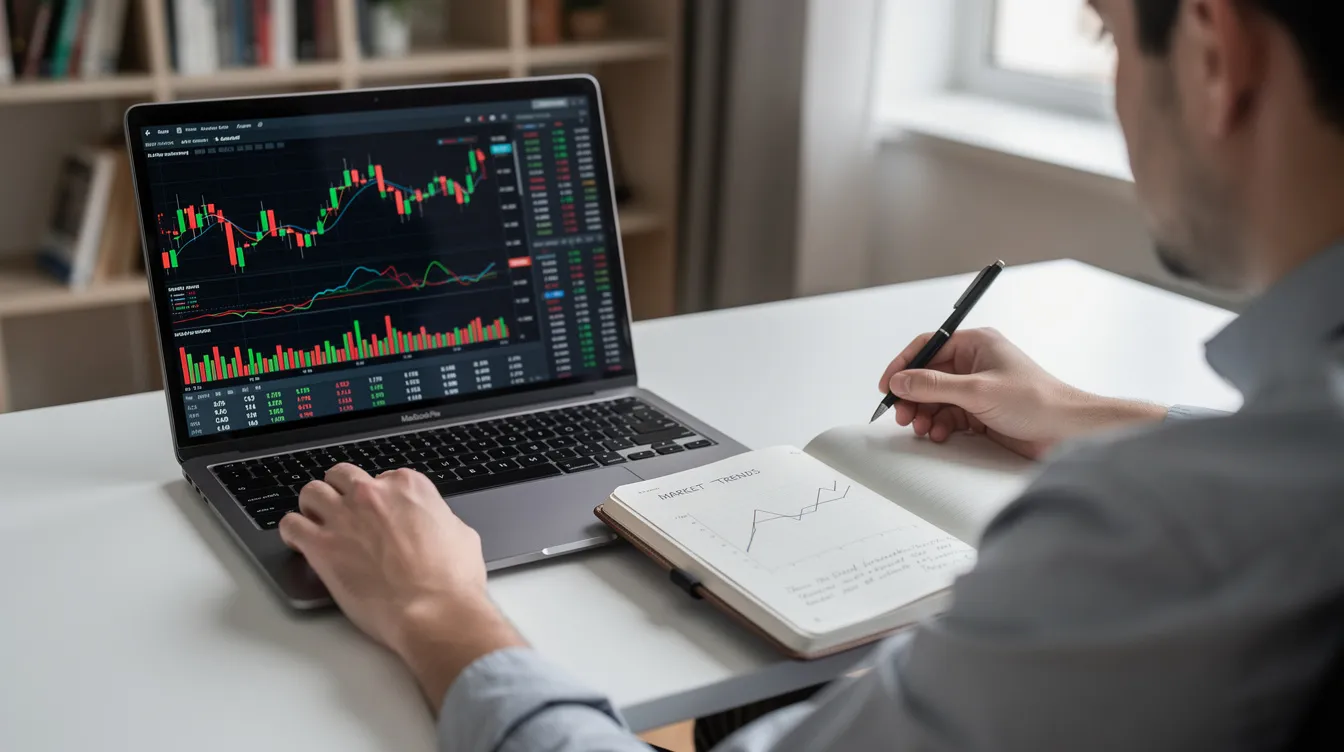
Trading is the act of buying and selling financial assets-stocks, currency pairs, indices, commodities, mutual funds, and more-with the goal of profiting from price changes. Traders capitalize on short-term price fluctuations, whereas long-term investors hold assets for years. Common markets include stocks, forex, commodities, and cryptocurrencies.
These trades happen on organized financial markets and stock exchanges. The new york stock exchange (NYSE) and Nasdaq handle the majority of U.S. stock market trading. Forex venues operate globally, and commodity exchanges handle precious metals, oil, and agricultural products. Cryptocurrency trading involves digital assets like Bitcoin and Ethereum, traded on dedicated crypto exchanges.
Here’s how market prices work in practice. Every asset has a bid price (what buyers will pay) and an ask price (what sellers want). The gap between them is the spread, which is a transaction cost. For example, if Apple stock shows a bid of $214.50 and an ask of $214.55, the spread is $0.05. In forex trading, the EUR/USD pair might quote 1.0850/1.0852, with a 2-pip spread.
The distinction between passive investing and active trading matters for beginners:
- Passive investing means buying mutual funds or index funds and holding them for years, with minimal daily decisions.
- Active trading means making frequent buy and sell decisions based on price movements, news, or chart patterns over shorter timeframes.
Understanding these basic market mechanics is a prerequisite before you open a live trading account. Without it, you’re gambling, not trading.
Choose What to Trade: Markets and Instruments for Beginner Traders
One of the biggest mistakes new traders make is trying to trade everything at once. Pick one or two markets first. Get comfortable. Then expand.
Stock trading is the most intuitive starting point. When you buy shares in a company, you own a small piece of that business. Beginner traders usually do well sticking to a few stocks-large-cap names like Apple, Microsoft, or Johnson & Johnson-where liquidity is high and spreads are tight. Exchange traded funds (ETFs) bundle many stocks into a single instrument, letting you trade shares of entire sectors or indices without the risk of betting on a particular stock.
Index trading takes diversification further. Instead of picking individual stocks, you trade the performance of a whole market-the S&P 500, FTSE 100, or Nasdaq 100. You can access these through index ETFs or index CFDs, depending on your broker. If one stock falls within the index, the impact is cushioned by the others.
Forex trading is another popular market. It involves trading currency pairs like EUR/USD or GBP/USD, and forex trading allows for 24-hour trading five days a week. The forex market is the most liquid in the world, with tight spreads on major pairs. However, leverage in forex is significantly higher than in stock trading, which magnifies both gains and losses. A move of 1% against you on a 50:1 leveraged position wipes out half your account.
Mutual funds and index funds are lower-intensity options. They don’t require active management and are ideal for beginners who want exposure to the stock market while learning how financial markets work. No need to watch a screen all day.
More advanced financial instruments-options, futures, and high-leverage CFDs-involve expiration dates, time decay, implied volatility, and complex margin requirements. Leave these for later in your trading journey. Commodities include physical goods like gold and oil, and while they can be traded through futures or CFDs, they add complexity beginners don’t need yet.
How to Match Markets to Your Lifestyle and Risk Tolerance
Your market choice should reflect your real life, not your fantasy of being a full-time professional traders on Wall Street.
Situation | Recommended Approach |
|---|---|
Full-time job, limited screen time | Swing trading stocks or indices on daily charts |
Europe/Asia timezone | Forex major pairs during London or Tokyo sessions |
Low risk tolerance | Index funds, ETFs, or blue-chip stocks |
High risk tolerance with experience | Forex, individual stocks, or sector ETFs |
Very volatile assets-crypto, exotic currency pairs, small-cap stocks-can produce exciting short term price movements but are usually unsuitable for brand-new traders. Liquidity issues, wide spreads, and sudden gaps make them unforgiving. Start with more liquid, well-known instruments like major indices, blue-chip stocks, and major currency pairs.
Learn the Basics: Core Concepts Every New Trader Must Understand
Before placing any real-money trade, you need to understand the core terminology and concepts. Here’s the minimum knowledge checklist:
- Market order: Buy or sell immediately at the current market price. Example: “Buy 10 shares of Apple at whatever price is available now.”
- Limit order: Buy or sell only at a specific price or better. Example: “Buy EUR/USD only if it drops to 1.0800.”
- Stop-loss: An automatic order that closes your losing position if price moves against you to a set level. Stop-loss orders help limit potential losses in trading.
- Take-profit: An automatic order that locks in gains when price hits your target.
- Margin and leverage: Borrowing money from your broker to control a larger position. A $1,000 account with 10:1 leverage gives you $10,000 in buying power-but losses are amplified equally.
- Position size: The amount of capital you allocate to a single trade.
Traders typically use technical analysis to predict future price moves. This involves studying charts, trendlines, support and resistance levels, moving averages (like a 50-day simple moving average), and indicators such as RSI and MACD. Traders often use analytical software for technical analysis, and most trading platforms include built-in charting tools.
Fundamental analysis evaluates value using company earnings, economic data, interest rates, and market sentiment. It matters more for stocks and mutual funds-think of it as asking “Is this company worth its share price?”
Understanding different trading styles is essential:
- Day trading: Opening and closing trades within the same trading day. Day traders open and close positions within the same day.
- Swing trading: Holding positions for several days or weeks. Swing traders hold positions for several days or weeks to capture medium-term trends.
- Position trading: Focusing on long-term trends and fundamentals, holding for weeks to months.
- Scalping: Making numerous small trades for minor profits, often within minutes. Scalping involves making numerous small trades for minor profits, requiring extreme focus.
Most beginners should start with slower trading styles like swing or position trading. These give you time to research, analyze, and manage risk without the pressure of split-second decisions.
Finally, understand that fees, spreads, and overnight financing eat into profits. Even with $0-commission brokers, the bid-ask spread, slippage, and swap charges on leveraged overnight positions are real transaction costs that affect every trade.
Risk and Money Management Fundamentals
Many new traders fail not because of bad strategy but because of poor money management. This is the single most important section in this article.
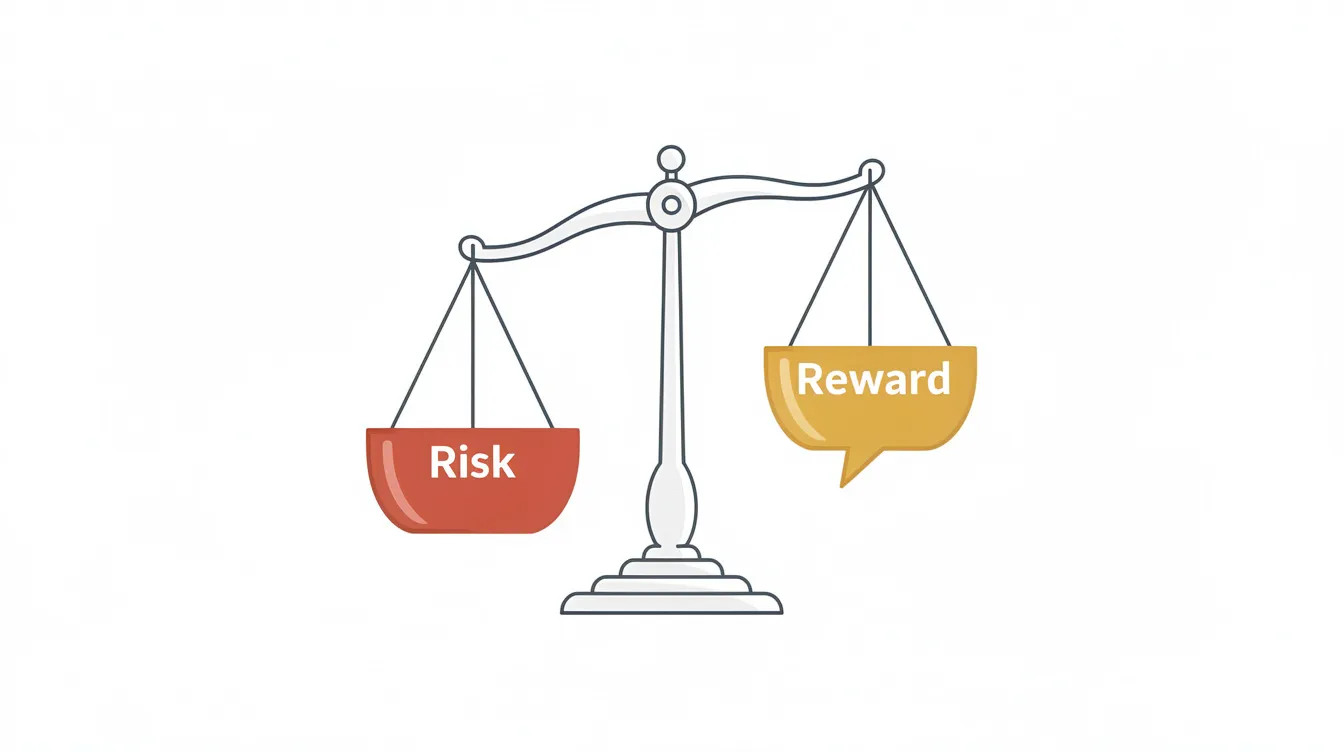
Risking only 1% to 2% of total capital per trade is a common recommendation. If you have $2,000 in trading capital, that means risking $20–$40 per trade. This keeps you in the game through inevitable losing streaks. Successful traders often limit losses to 1% of their capital per trade.
A stop-loss order placed at the time of entry is non-negotiable for beginner traders. Example: you buy a stock at $100 and set a stop-loss at $95. If the stock falls, your maximum loss is $5 per share (5%). Set a take-profit at $110 and your risk-to-reward ratio is 1:2-risking $5 to make a profit of $10.
Protecting buying power means avoiding over-leveraging and leaving enough unused margin to survive a string of losses. In margin trading, you can lose more than your deposit if the market moves sharply against you. Never take on too much risk by maximizing leverage on every trade.
Step‑by‑Step: How Beginners Can Start Trading in 2026
Here’s the practical roadmap. Follow these steps in order.
Step 1: Define your goals and time horizon. Are you looking for supplemental income, long-term capital growth, or simply building a new skill? Your answer shapes your trading style, acceptable risk level, and market choice. Someone seeking personal finance growth over a decade approaches this differently than someone wanting active short-term returns.
Step 2: Choose a trading style. For most beginners, part-time swing trading-checking charts once or twice a day and holding positions for days to weeks-is the best fit. Avoid scalping and high-intensity day trading at the start. You can always move to faster styles later.
Step 3: Select a regulated broker. In the U.S., choose a broker registered with FINRA and SIPC. In the UK, look for FCA regulation. Many top-rated brokers for beginners in 2026 offer $0 commissions on stock and ETF trades, $0 account minimums, and fractional shares starting from $1. Trading platforms vary in features and fee structures, so compare charting tools, educational resources, and margin requirements before committing. Verify how your broker handles margin trading rules, especially given the recent PDT rule changes.
Step 4: Open a demo account and practise trading. Demo accounts allow traders to practice without financial risk. Spend at least 4–8 weeks placing simulated trades using realistic position sizes. Follow your written rules. Aim for 30–50 trades before considering live trading.
Step 5: Build a simple trading plan. Your plan should cover:
- What markets and instruments you will trade
- Entry and exit rules (what conditions must be met)
- Risk per trade (1–2% of capital)
- Trading times (when you will and won’t be at the screen)
- A weekly review routine
Step 6: Start small with real money. After consistent demo results, start trading with a modest amount-$500 to $2,000 is typical. This should be money you can afford to lose without affecting your rent, bills, or financial stability. Use play money in the sense that losing it all won’t harm your life.
Using Demo and Paper Trading Effectively
A broker’s demo account uses live market data but virtual money, letting you experience real price movements without financial risk. A paper trading account can also mean tracking hypothetical trades on a spreadsheet. Both work. Using a demo account helps practice trading without financial risk-this point can’t be overstated.
Key rules for effective demo use:
- Trade realistic position sizes. Don’t use a $1,000,000 virtual balance if you plan to start live with $1,000.
- Keep a trading journal. A trading journal helps document mistakes and refine strategies. Record every entry, exit, rationale, and outcome.
- Treat it seriously. Random clicking teaches nothing.
Don’t stay on demo forever. Clear criteria for going live: 1–2 months of consistent, rule-based performance, at least 30–50 logged trades, and evidence that you followed your stop-losses and plan.
Building Your First Strategy as a Beginner Trader
Forget complex systems and paid signal groups. Your first strategy should be simple, rules-based, and repeatable.
Start with one market and one approach. For example: trend-following on a daily chart for a major index or currency pair. Here’s a basic setup:
- Identify trend direction using a 50-day moving average. Price above it = uptrend; below = downtrend.
- Define entry using a simple breakout above a recent resistance level (in an uptrend) or a pullback to the moving average.
- Set stop-loss below the recent swing low.
- Set take-profit at 2x or 3x the distance of your stop-loss.
Incorporate fundamental analysis lightly. Avoid trading stocks around earnings releases or forex pairs during major central bank announcements. Check financial news before you trade, but don’t let it override your technical rules.
Successful trading requires a clear plan for entering and exiting trades. A trading plan includes rules for entering and exiting trades-when conditions are met, you trade. When they’re not, you wait. A written trading plan helps remove emotional decision making from the equation.
Backtest your idea on historical charts. Then forward-test it in your demo account. Only after both show reasonable results should you trade it live. Document everything in plain language so that any trade either clearly meets or doesn’t meet the written rules.
Common Beginner Strategy Mistakes to Avoid
- Changing strategies after 2–3 losses. A strategy is judged over dozens of trades, not a handful. Losses are normal. Accept them.
- Over-complicating charts. Layering five indicators on top of each other creates conflicting signals and paralysis. Start with one or two.
- Trading every move. Taking too many trades-especially low-probability setups-increases transaction costs and reduces your edge. High transaction costs can significantly impact day trading profits, and the same applies to overtrading in any style.
- Following hot tips. Copying trades from social media without understanding the logic, risk, or whether the trade fits your plan is unnecessary risk.
- Revenge trading. Immediately trying to earn back losses by increasing position size or taking impulsive trades is a recipe for rapid capital erosion. Emotions can negatively impact trading decisions, and revenge trading is the sharpest example.
- Overleveraging. Borrowing money beyond what your plan allows, ignoring margin requirements, and ignoring the risk of a margin call.
New traders should accept that losses are part of the process. The goal isn’t to never lose-it’s to lose small and win bigger over time.

Psychology, Expectations, and Long‑Term Development
Mindset is as important as analytics for new traders. You can have a profitable strategy on paper and still lose money because of how you execute it emotionally.
Set realistic expectations. Between 74% and 89% of retail traders lose money in their first year. Only about 10% to 15% of day traders are profitable long-term, and 85% of day traders quit within the first three years. Sustainable profitability typically takes many months or even several years of deliberate practice.
Treat your early phase as paid education. Your small, controlled losses are tuition. Accepting this reframe keeps you from emotional decision making when trades don’t go your way.
Key psychological challenges to watch for:
- Fear of missing out (FOMO): Jumping into a trade because it’s moving without checking your plan.
- Fear of loss: Closing winners too early or refusing to take a valid trade setup.
- Overconfidence after winning streaks: Increasing size recklessly because you feel invincible.
- Trading with essential money: If you’re trading with rent money, every tick against you creates panic. Only trade what you can afford to lose.
Practical habits that help:
- Set fixed trading hours. Don’t stare at screens all day.
- Use a pre-trade checklist before every entry.
- Take cooldown periods after losing trades-step away for an hour or a day.
- Traders should review their performance regularly to improve. Do weekly and monthly reviews using your trading journal.
Many individuals balance active trading with long-term investing in mutual funds or index funds for stability and diversification. This blended approach supports smart investing by separating your “learning capital” from your “wealth-building capital.”
Past performance of any strategy doesn’t guarantee future performance, but consistent tracking over time reveals whether your edge is real.
When (and If) to Consider Day Trading
Day trading means entering and exiting trades within the same trading day. It demands constant screen time, access to real-time data, and fast decision-making. Day traders require real-time market data feeds and charting platforms to execute effectively. It is not a beginner-friendly style.
Only about 10% to 15% of day traders are profitable over time. Most day traders face substantial losses over time, often compounded by high transaction costs that eat into whatever gains they manage.
As of 2026, the SEC has approved removal of the Pattern Day Trader rule. Previously, day traders had to maintain a minimum account balance of $25,000 for active intraday stock trading. While the new risk-based margin system is being phased in through October 2027, many brokers still enforce legacy rules. Check with your broker. Day traders should limit trades to 1% of their portfolio to manage risk.
An active trader considering day trading should honestly evaluate:
- Do you have several months of profitable swing or position trading experience?
- Can you commit full-time hours to the screen during trading sessions?
- Is your stress tolerance high enough for rapid decision-making?
- Is your trading capital sufficient-not just for the rules, but for surviving losing streaks?
If the answer to any of these is no, stick with slower styles. There’s no shame in swing trading stocks or trading on a daily chart. Many successful traders never touch day trading.
This article does not provide investment advice. The content is educational only. Always consult qualified financial advisors before making significant trading decisions.
FAQ
How much money do I need to start trading as a beginner?
Many online brokers in 2026 allow new traders to open a trading account with $0 minimum deposit and buy fractional shares for as little as $1. However, effective risk and money management usually works better from $500–$2,000 and up, because you need enough capital to diversify across a few stocks or positions and still risk only 1–2% per trade. High-leverage markets like forex trading tempt beginners to start with $50–$100, but this often leads to overleveraging and fast losses. Never trade with money needed for rent, debts, or short-term essentials. Treat your initial trading capital as tuition for learning.
Is forex trading good for complete beginners?
Forex trading offers high liquidity and 24/5 access to major currency pairs like EUR/USD and GBP/USD, including pairs priced against the us dollar. However, the combination of leverage and fast price movements can be overwhelming for new traders. Complete beginners often benefit from starting with simpler products like index trading via ETFs or large-cap individual stocks, then gradually exploring forex once they understand risk management. If you’re determined to start trading forex, stick to major pairs on higher timeframes (daily or 4-hour charts) and use a demo account first.
How long should I use a demo or paper trading account?
A minimum of 4–8 weeks of consistent demo or paper trading is recommended before going live. Focus on following a written trading plan rather than making random trading decisions. Clear criteria for “demo graduation” include placing at least 30–50 trades, respecting stop-losses consistently, and avoiding large emotional mistakes. Keep in mind that demo trading feels different from live trading-there’s no real money at stake, so emotions are muted. When you switch to live, start with small position sizes to bridge that gap.
Can I learn trading while working a full-time job?
Absolutely. Many beginner traders start part-time, using evening or early-morning hours to study financial markets and place swing or position trades. Slower trading styles using daily or 4-hour charts are far better suited to people with full-time commitments than high-frequency day trading within the same trading day. Set a realistic weekly schedule-perhaps 30–60 minutes per day for education, market analysis, and trade reviews. Consistency matters more than intensity. You can trade shares, review your journal, and study financial news without quitting your job.
What’s safer for beginners: individual stocks or mutual funds and index funds?
Diversified mutual funds and index funds generally carry less single-company risk and are often recommended as core holdings for new investors. If one particular stock within an index drops, the impact is cushioned by the rest. Individual stock trading can offer higher potential returns-buying and selling shares of a same stock at the right time can yield significant gains-but also larger drawdowns, making risk management even more important. A blended approach works well for many beginners: use mutual funds or index funds for long-term wealth building while allocating a small portion of capital to active trading as you learn. This way, even during a short period of losses in your active trades, your core portfolio stays relatively stable.