
Key Takeaways
A simple swing trading forex strategy on the 4-hour and daily charts is the most beginner friendly approach in 2026, balancing clarity with a manageable time commitment.
This strategy focuses on major currency pairs like EUR/USD and GBP/USD to reduce spreads and slippage, keeping transaction costs low.
Fixed risk per trade of around 1% and clear stop loss and take profit levels based on recent swing highs and lows protect your capital from the start.
Combining basic technical analysis tools (moving averages, support and resistance levels) with light fundamental analysis improves trade quality and timing.
Start forex trading on a demo account, then go live gradually once you have at least 30–50 tested trades showing consistent results.
Introduction: Why Beginners Should Start with Swing Trading
Most people who want to trade forex get overwhelmed by the sheer number of trading strategies available. Scalping, day trading, position trading, breakout trading – the list goes on. But if you’re new to the forex market and want a single, concrete approach you can start testing this week, swing trading on higher timeframes is hard to beat.
Forex trading strategies help traders decide when to buy or sell. Swing trading, specifically, aims to profit from price moves lasting several days to weeks. Instead of watching charts for hours, you analyze once or twice a day and let trades develop.
This article won’t hand you a long list of basic forex trading strategies. Instead, it walks you through one complete, step-by-step forex trading strategy built around trend following and pullback entries – the kind of approach that even experienced traders rely on.
Compared to scalping, which aims for quick profits from small price changes and holds positions for seconds to minutes, or day trading, which closes all positions before the daily session ends, swing trading is less stressful and far more forgiving of small timing errors. You don’t need lightning-fast reflexes. You need patience and a clear plan.
By the end of this guide, you’ll have a repeatable forex strategy you can test on a demo account starting today.

Forex Basics You Need Before Using Any Strategy
This section is a quick recap, not a full forex course. If you already know what a pip is, skip ahead. If not, here’s the minimum you need before applying any trading plan.
Currency pairs, pips, and lots:
A currency pair like EUR/USD consists of a base currency (EUR) and a quote currency (USD). When you buy EUR/USD, you’re buying euros and selling dollars.
A pip is the smallest standard price movement – 0.0001 for most pairs. If EUR/USD moves from 1.0850 to 1.0860, that’s a 10-pip move.
Lot sizes determine how much a pip is worth to you: a standard lot (100,000 units) means roughly $10/pip on EUR/USD; a mini lot (10,000) is about $1/pip; a micro lot (1,000) is about $0.10/pip.
Trading sessions and liquidity:
The forex market operates 24 hours a day, five days a week, rotating through three major sessions: Tokyo, London, and New York.
The London–New York overlap (roughly 12:00–16:00 GMT) tends to deliver the highest trading volume and market volatility – ideal windows for swing traders to spot entries.
Spreads and why majors matter:
The bid is what buyers pay; the ask is what sellers demand; the difference is the spread – your transaction cost. Major pairs like EUR/USD typically have spreads of 0.6–1.0 pips, while exotics can cost several pips per trade.
Leverage:
In 2026, regulated brokers in the EU, UK, and Australia cap retail leverage at 30:1 for major pairs; the US caps at 50:1. Beginners should use far less effective leverage than the maximum allowed. This ties directly into the risk management rules we’ll cover later.
The Core Idea: A Simple Swing Trading Forex Strategy
Here’s the strategy in one paragraph: identify the prevailing trend on the daily chart using moving averages, wait for price to pull back into a support or resistance zone on the 4-hour chart, enter when momentum confirms the trend is resuming, and manage risk with logical stop loss and take profit levels.
This is a trend trading strategy, not a range trading strategy. Range trading profits from price oscillations between support and resistance in sideways markets. Our approach is different – it works best when the market price is moving cleanly up or down. Forex trading strategies combine technical and fundamental analysis, and this one leans primarily on technicals with a light macro overlay.
Timeframes used:
Daily (D1) chart – to determine trend direction
4-hour (H4) chart – for entries and exits
Tools required:
50-period and 200-period moving averages (SMA or EMA)
Horizontal support and resistance zones drawn from recent swing highs and lows
RSI set to 14 periods as a momentum confirmation tool
Technical analysis uses charts and indicators to predict price movements, and these three tools give you everything you need without cluttering your screen.
In the full implementation, mark up a pair like EUR/USD on its daily and 4-hour charts to see how these tools interact in real time.
Step 1 – Define the Trend on the Daily Chart
Trading with the trend is what makes a forex strategy more beginner friendly. You’re swimming with the current instead of against it, which means fewer false signals and more forgiving entries. Trend trading involves following the current market direction, and that’s exactly what we do first.
How to define the trend:
Uptrend: Price is trading above the 200-day moving average, the 50-day moving average is above the 200-day, and both are sloping upward. You should see a pattern of higher highs and higher lows.
Downtrend: Price is below the 200-day moving average, the 50-day moving average is below the 200-day, and both slope downward. Look for lower highs and lower lows.
When to skip trades:
If the 50- and 200-day moving averages are flat and price is chopping sideways, there is no clear trend. This environment is better suited for a range trading strategy – but as a beginner, simply stand aside until direction becomes clear.
Keep your focus narrow:
Watch no more than 2–3 major currency pairs at a time. EUR/USD, GBP/USD, and USD/JPY are enough. Trying to analyze multiple currency pairs across dozens of charts leads to analysis paralysis.
Step 2 – Mark Key Support and Resistance Zones
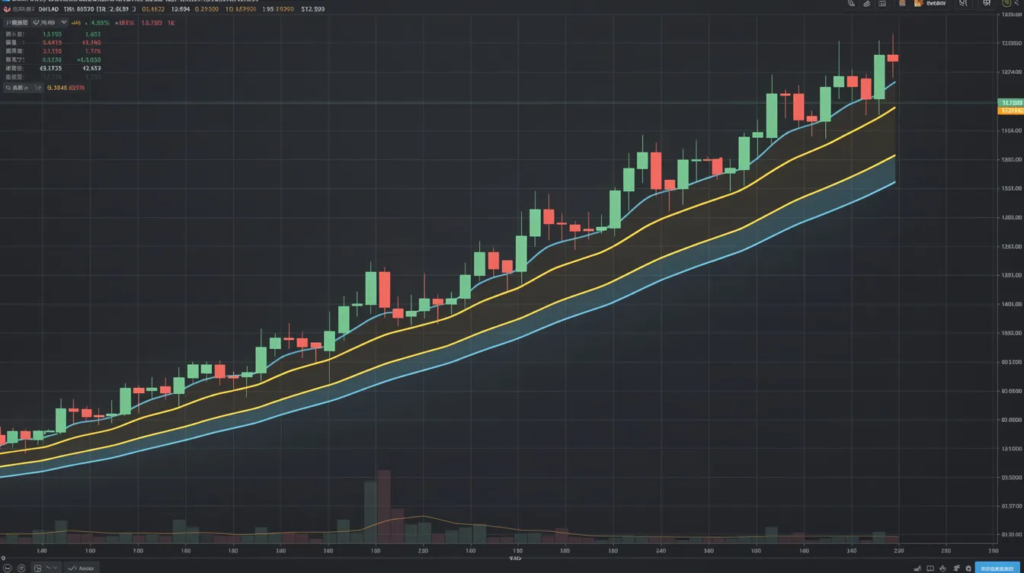
Support is a price area where buyers have previously stepped in and pushed price higher. Resistance is where sellers have historically overwhelmed buyers and pushed price lower. Range trading focuses on buying near support and selling near resistance, but in our trend trading approach, we use these zones as pullback entry areas aligned with the trend.
How to mark zones:
On the daily chart, identify 2–4 obvious swing highs and swing lows from the past few weeks to months. These are your key levels.
Refine on the 4-hour chart by looking for areas with multiple touches, rejection candles, or consolidation clusters.
Use zones (bands of 10–30 pips) rather than exact lines. Markets rarely reverse at a single pip.
Keep charts clean:
Range trading uses support and resistance levels to identify price reversals, and those same levels help trend traders find ideal pullback zones. But don’t overdo it – 2–4 zones per pair is enough. More than that creates confusion.
How this fits the strategy:
In an uptrend, you’re watching for pullbacks into daily support zones. In a downtrend, you’re waiting for price to rally into resistance zones. That alignment between trend and zone is where your entries live.
Step 3 – Build a Concrete Entry Plan on the 4-Hour Chart
Entries happen on the 4-hour chart. This timeframe gives swing traders enough granularity to time trades well without requiring constant screen monitoring. If you can’t watch markets all day, the H4 chart is your best friend.
Long setup (uptrend):
Daily chart confirms uptrend (price above 200 MA, 50 above 200).
Price pulls back on H4 toward a daily support zone or the rising 50-period moving average on H4.
RSI turns upward from below 50, signaling momentum is shifting back in the trend’s direction.
A bullish candlestick pattern – such as a pin bar, hammer, or engulfing candle – forms at the support zone.
Enter at the close of the confirmation candle.
Short setup (downtrend):
Daily chart confirms downtrend (price below 200 MA, 50 below 200).
Price retraces up into a daily resistance zone or the falling 50-period MA on H4.
RSI turns downward from above 50.
A bearish pattern (shooting star, bearish engulfing) forms at resistance.
Enter at the close of the confirmation candle.
A trading plan includes specific entry and exit rules, and writing yours down before you trade removes guesswork. These setups are your entry and exit points – follow them mechanically.
Historical examples from EUR/USD in 2024–2026 show repeated pullback entries near the 50 MA on H4 during trending periods, particularly around central bank decisions. Review past charts to find these patterns yourself.
Step 4 – Exact Stop Loss and Take Profit Rules
Fixed, logical exits are what separate a real forex trading strategy from random bets. Without them, you’re relying on gut feeling – which rarely survives contact with market volatility.
Stop loss placement:
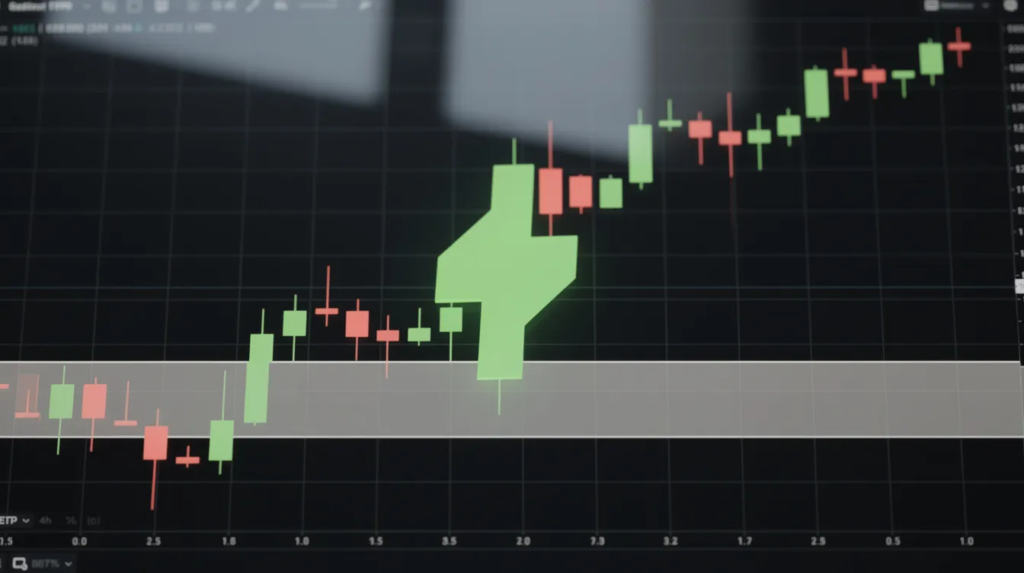
For long trades, place the stop loss just below the most recent swing low on the 4-hour chart, plus a buffer of 3–5 pips.
For short trades, place it just above the recent swing high, plus 3–5 pips.
Use stop loss orders to limit potential losses. This is non-negotiable.
Take profit placement:
First target: the previous swing high (for longs) or swing low (for shorts) visible on H4 or the daily chart.
Aim for at least a 2:1 reward-to-risk ratio. If your stop is 40 pips, your target should be at least 80 pips.
Optional trailing stop:
Once price has moved 1R (one times your risk distance) in your favor, consider trailing your stop using 2× ATR(14) on H4. This lets winners run while locking in gains.
Write it down before you click buy or sell:
A well-defined trading plan helps avoid emotional decision-making. Every stop and target should be defined before entry. If you find yourself moving your stop further away during a trade, you’re breaking your rules.
Step 5 – Position Sizing and Risk Management for Beginners
Protecting capital matters more than finding the best forex trading strategy. A brilliant entry with reckless sizing will still blow an account. Risk management is crucial for long-term trading success.
The 1% rule:
Risk approximately 1% of your account balance per trade. On a $1,000 account, that’s $10 at risk. On a $5,000 account, $50.
Position size should ensure a single loss stays within your risk budget – always.
How to calculate position size:
Use this formula: Position Size = (Account Balance × Risk %) ÷ (Pip Value × Stop Distance in Pips).
Most brokers offer a built-in position size calculator. Use it instead of doing mental math under pressure.
Weekly loss limits:
Set a daily loss limit to manage trading risk effectively. A common rule: if you lose 3% in a single week, stop trading and review your journal.
Correlation trap:
Avoid holding long positions on EUR/USD and GBP/USD simultaneously. These pairs are highly correlated, meaning a USD spike would hit both trades. This hidden overexposure is a form of currency risk that beginners often overlook.

Step 6 – Adding Simple Fundamental Analysis to Your Swing Trades
Fundamental analysis examines economic data and geopolitical events. While our strategy is primarily technical, ignoring the macro picture entirely is a mistake – especially for swing traders holding positions for days. Economic indicators significantly impact currency prices, and a single central bank statement can invalidate a technical setup overnight.
Check the economic calendar:
Before placing any trade, scan the week ahead for high-impact releases: FOMC rate decisions, ECB meetings, monthly US Nonfarm Payrolls, CPI data. News trading focuses on major economic events and their impact on currencies, and even if you’re not a news trader, you need to know when these events are scheduled.
Avoid new entries before big releases:
If a high-impact event is scheduled within 24 hours on the currency pair you’re trading, either skip the entry or reduce your position size. Factors influencing currency prices can shift rapidly during central bank meetings.
Track central bank bias:
Is the Fed hawkish or dovish? Is the ECB signaling rate cuts? The carry trade strategy profits from interest rate differentials between currencies, and that interest rate differential drives longer-term trends. In 2025–2026, for example, ECB rate adjustments while the Fed paused created directional moves in EUR/USD that aligned well with technical trend signals.
Keep it simple:
You don’t need a PhD in economics. Spend five minutes reading a calendar and noting the tone of recent central bank statements. That’s enough to avoid stepping in front of a freight train.
Step 7 – Turning the Strategy into a Repeatable Daily Routine
A routine helps beginners stick to their forex strategy and reduces impulsive trades. Without structure, you’ll find yourself opening charts at random hours, chasing price moves, and abandoning your trading plan.
A simple daily schedule:
Evening (15–20 minutes): Review daily charts on your 2–3 pairs. Mark or adjust support and resistance levels. Check trend status (are MAs still aligned?). Note any upcoming economic data on the calendar.
During London–New York overlap: Check H4 charts every 4 hours or when an alert fires. Look for pullback setups forming. Execute if rules are met.
Use alerts, not screen time:
On platforms like TradingView or MetaTrader, set price alerts at your key support and resistance zones. When price reaches a zone, you get notified. No staring required.
Keep a trading journal:
Log every trade: date, pair, entry price, stop, target, outcome, and one or two lessons learned. A trading plan outlines financial goals and risk tolerance, but a journal is where you track whether you’re actually following it. Successful traders use a trading plan to manage risks effectively – and a journal keeps you honest.
Review after 30–50 trades:
Traders should backtest their strategies to refine their trading plan. After your first batch of live or demo trades, evaluate your win rate, average reward-to-risk ratio, and maximum drawdown. That sample size tells you whether this strategy fits your trading style.
When This Beginner Strategy Works Best – and When to Stand Aside
No trading strategy works in all market conditions. Accepting this early will save you from unnecessary losses and frustration.
This strategy performs best when:
The forex market is trending clearly, with clean sequences of higher highs/higher lows (or the reverse).
Moving averages are fanning out and sloping in one direction.
Fundamental drivers (interest rate expectations, economic data) align with the technical trend direction.
This strategy struggles when:
Price action is choppy, with no defined trend. The current market price bounces randomly between levels without follow-through.
Major news-driven whipsaws create false signals – even experienced traders get caught in these.
The market breaks into a tight trading range with no directional bias.
What to do in sideways markets:
Range traders thrive when price oscillates between support and resistance, but trend-following swing traders get chopped up. As a beginner, simply recognize the chop and step aside. You can also reduce trading frequency or return to a demo account during periods of repeated false signals and high market volatility spikes.
How to Start Trading Forex with This Strategy (Demo to Live)
The progression from theory to real money should be gradual. Rushing into live trading currencies is the fastest way to lose capital.
Step 1 – Backtest on historical data:
Pull up 6–12 months of chart history on EUR/USD or GBP/USD. Walk through the daily and H4 charts candle by candle. Mark where your rules would have triggered entries, stops, and targets. Record the results.
Step 2 – Practice trading on a demo account:
A demo account allows beginners to practice trading without risk. Place 20–50 trades following the exact rules. Track your win rate, average reward-to-risk, and drawdown. Traders should use a demo account to test risk management strategies before committing real money.
Step 3 – Go live small:
Once your demo results are consistent over at least 30–50 trades, start trading forex with a small account or micro lots. Keep risk at 1% or less per trade. Treat every trade the same way you did on demo.
Step 4 – Scale gradually:
Only increase lot sizes after demonstrating consistency over several months of live trading. The goal in the first year is building skill, discipline, and trust in your process – not maximizing profits.
Forex traders who survive the first year are the ones who prioritize process over P&L.

Common Beginner Mistakes with Swing Trading Strategies
This section helps you avoid the usual pitfalls that sabotage otherwise solid trading strategies. Most blown accounts come from behavioral errors, not bad chart reading.
Overleveraging:
Even if your broker offers 500:1 leverage, your effective leverage should stay closer to 10:1 or lower. Position trading and swing trading don’t require high leverage – they require patience.
Moving stops:
Moving your stop loss further away to “give the trade room” is the fastest path to outsized losses. Your stop was set at the invalidation point for a reason. Respect it.
Chasing price moves:
Entering in the middle of a strong move instead of waiting for a pullback to support or resistance violates the core logic of this trading plan. Wait for the setup, or skip the trade.
Strategy hopping:
Changing your indicators and rules after three losing trades isn’t adapting – it’s panicking. Test one approach over a meaningful sample before making changes. Chart patterns and technical analysis tools only help if you use them consistently.
Dropping to lower timeframes too soon:
Scalping on 1-minute or 5-minute charts introduces enormous noise and transaction costs. Start on the H4 and daily timeframes. Get consistently profitable there first.
FAQ
Is swing trading really the best forex trading strategy for beginners?
There’s no universal best forex trading strategy, but swing trading is often the most practical starting point. It uses higher timeframes, which means fewer decisions per day and clearer signals. You avoid the intense stress and high transaction costs of scalping while still getting enough trade opportunities to learn. Once comfortable, you can explore complementary styles like intraday range trading or trend trading on shorter timeframes.
How much money do I need to start trading this strategy?
Many regulated brokers let you start forex trading with as little as $100–$500. With small accounts, using micro or nano lots is essential so that your 1% risk per trade translates into manageable position sizes. Choose an amount you can afford to lose entirely without affecting your financial uncertainty or daily life. In the early stages, focus on percentage returns and consistency rather than absolute dollar figures.
How long does it take to know if this forex strategy works for me?
You need at least 30–50 trades to get a statistically meaningful sample. Evaluate win rate, average reward-to-risk, and maximum drawdown – not just a few recent wins or losses. Many new forex traders need several months of focused practice before they execute a trading plan consistently. Market participants who rush to judgment after five trades usually end up abandoning a strategy that would have worked.
Can I use this swing trading strategy on other markets like indices or gold?
The core principles – trend following, support and resistance, pullback entries – apply to other liquid markets such as major stock indices, gold (XAU/USD), and even futures markets. However, each market has different price movement characteristics, spreads, and trading hours. Traders aim for consistency in one market before expanding. Adjust stop sizes and position sizing, and test thoroughly on a demo account before committing real capital to a new instrument.
What should I do if I keep losing with this strategy?
Pause live trading and return to demo trading. Review your trading journal to identify patterns in mistakes – are you entering before signals are complete? Ignoring economic data? Moving stops? If the rules are followed correctly but results remain poor over 50+ trades, it may be time to adjust parameters such as wider stops, different pairs, or even sell currencies short instead of only going long. If nothing improves, consider exploring another approach more suited to your risk tolerance and personality. The market doesn’t owe you profits; it rewards discipline and adaptation.