
Meta Title: What Is the Most Successful Scalping Strategy? EMA + RSI + VWAP Template (2026 Guide)
Meta Description: Discover what makes a scalping strategy truly successful in 2026. Learn the EMA + RSI + VWAP confluence template with concrete rules, risk management, and how to adapt across forex, indices, and stocks.
Scalping aims for quick profits from small price fluctuations, and it remains one of the most popular approaches to day trading in 2026. But with dozens of indicator combinations and conflicting advice flooding the internet, figuring out what is the most successful scalping strategy can feel overwhelming.
This guide breaks down a concrete, data-tested template-the EMA + RSI + VWAP confluence strategy-and walks you through exactly how to set it up, execute trades, and manage risk. You’ll also see how it compares to other popular scalping strategies so you can decide what fits your trading style.
Key Takeaways
There is no single “holy grail” scalping strategy. However, data-driven setups combining exponential moving average trends, relative strength index triggers, and volume weighted average price confirmation have proven among the most robust across forex and index futures in 2026. A gold trading study using this type of confluence across 247 trades showed a profit factor of 1.76 and mean expectancy of +0.414R per trade.
The most successful scalping strategy combines three pillars: a clear directional bias defined by moving averages, a precise entry trigger from RSI or price action scalping, and strict risk management with a small fixed stop and predefined profit target. Scalping requires significant dedication and discipline to execute this consistently across many trades.
Success depends more on adapting the strategy to current market conditions-trending, range-bound, or news-driven-than on the specific indicator choice itself. Factors like spread widening, trading volume, and session timing matter enormously.
Backtesting and paper trading for at least 4–6 weeks is mandatory before going live, even with a proven template. Real-trade performance after factoring in slippage, spread, and transaction costs often diverges significantly from naive backtests.
This article walks through the EMA + RSI + VWAP confluence strategy step by step, then compares it with other popular scalping trading strategies used in day trading.
What Makes a Scalping Strategy “Most Successful” in 2026?
The phrase “most successful” needs a clear definition. It doesn’t mean a strategy that wins every trade or produces one spectacular day. It means a stable edge demonstrated over 500+ trades, with realistic execution costs factored in and survivable drawdowns-not just a few lucky sessions.
Here are the objective criteria that separate a genuinely successful scalping strategy from hype:
Criteria | Benchmark |
|---|---|
Win rate (for ~1:1 R:R setups) | Above 55% |
Profit factor | Greater than 1.5 |
Max drawdown vs. account | Under 5–8% |
Robustness | Works across multiple instruments |
Trade sample | 500+ trades minimum |
Scalping is a high-frequency trading strategy designed to capture incremental profits. A scalper might execute 100 or more trades in a day, which means even small inefficiencies in your process-poor fills, wide spreads, emotional entries-compound fast. High transaction costs can significantly impact scalping profits, so scalpers typically rely on strict risk management to manage transaction costs effectively.
It’s worth noting that scalping is legal and allowed by exchanges and brokerages, though some brokers impose restrictions on holding times or minimum distances for stops. Always verify your broker’s policies.
Since 2024–2026, higher transaction costs and evolving fee structures in futures markets have made raw speed less important than disciplined process and spread-aware entry and exit rules. Successful scalping requires high liquidity and high volatility in your chosen instrument, not just a fast connection.
Scalping is a high-risk, high-reward trading tactic. The following sections describe a specific high-probability template and show how it adapts to forex scalping, indices, and stocks.
The Core “Most Successful” Template: EMA + RSI + VWAP Confluence
Among the many scalping strategies available, a confluence setup using exponential moving averages, VWAP, and the relative strength index has proven highly adaptable and testable in 2026. Scalpers utilize technical analysis to identify entry and exit points rapidly, and this template gives you a structured framework for doing exactly that.
Exact tools needed:
9-period EMA (fast)
21-period EMA (slow)
VWAP (daily reset)
RSI with period 7–14 (depending on volatility preference)
1-minute or 3-minute chart
Technical analysis tools include moving averages and specific price patterns, and this setup leverages both. The EMA Crossover strategy uses fast and slow EMAs for trades, while VWAP is used to identify the average price weighted by volume. Combining them filters out low-quality signals that any single indicator would produce alone.
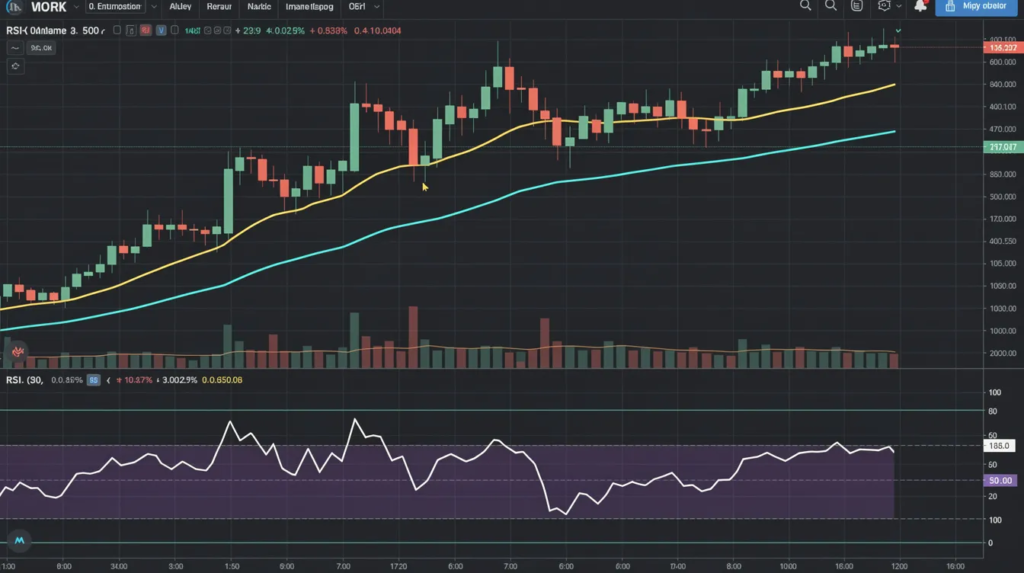
The core idea is simple: trade short bursts in the same direction as the intraday trend (defined by EMAs and VWAP) using RSI pullbacks for precise entries. This strategy is suitable for day trading major currency pairs like EUR/USD and GBP/USD, index futures, and highly liquid large-cap stocks due to tight spreads and deep liquidity.

Step 1: Define Trend and Market Conditions With Moving Averages and VWAP
Before placing any scalping trade, you need to classify the environment. Identifying market conditions-trend versus range-is the first decision, and it determines whether you should be aggressive, conservative, or sitting on your hands entirely.
How to read 9 EMA and 21 EMA on short timeframes:
Uptrend: 9 EMA is above 21 EMA and both slope upward. Price is making higher highs and higher lows relative to both EMAs. This is where you look for long trades.
Downtrend: 9 EMA is below 21 EMA and both slope downward. Price is making lower highs and lower lows. This is where you look for short trades.
No-trade zone: EMAs are flat and crossing frequently. Price chops back and forth. Stand aside.
Scalpers often use moving averages for quick trades, and the EMA pair acts as a dynamic trend filter that reacts faster than simple moving averages on short timeframes.
How to use VWAP as your intraday anchor:
VWAP represents the average price at which an instrument has traded throughout the day, weighted by trading volume. Think of it as the “fair value” line for the session.
Price and EMAs above VWAP → bullish bias confirmed
Price and EMAs below VWAP → bearish bias confirmed
Price chopping around VWAP → range-bound, lower-quality setups
Concrete example: On a EUR/USD 1-minute chart during the London open, the 9 EMA sits above the 21 EMA and both remain above VWAP for 30+ minutes. Price pulls back to the 9 EMA area but holds above VWAP. This alignment confirms a bullish bias for long scalps.
Scalp trade is often conducted during periods of high volume and volatility, and this kind of clear alignment tends to appear most reliably during active trading sessions.
Rule of thumb: Only take long scalp trades when trend direction and VWAP agree bullish. Only take short trades when they agree bearish. Stand aside when they conflict.
Step 2: Entry Triggers Using RSI Pullbacks and Price Action
This trading strategy does not chase breakouts. Instead, it waits for small pullbacks toward the moving averages and VWAP before entering, which provides better risk-to-reward and reduces whipsaw losses.
RSI settings for scalping trading:
Use RSI(7) or RSI(9) for more sensitivity on short timeframes. The relative strength index helps identify overbought conditions (above 70) and oversold conditions (below 30), but for scalping triggers, you’ll focus on mid-range behavior during pullbacks.
Long scalp entry rules (trending market above VWAP):
Confirm 9 EMA above 21 EMA, both above VWAP
Wait for price to retrace toward 9 or 21 EMA
Watch RSI dip below 40 during the pullback
Enter when RSI turns back up through 40–50 and a bullish candle closes back above the fast EMA
Look for rising volume on the trigger candle
Short scalp entry rules (downtrend below VWAP):
Confirm 9 EMA below 21 EMA, both below VWAP
Wait for price to pull back toward 9 or 21 EMA
Watch RSI climb above 60 during the pullback
Enter when RSI turns down through 50–60 and a bearish candle closes below 9 EMA
Confirm with volume expansion on the trigger candle
Momentum scalping uses indicators like RSI and MACD to time these entries precisely. Effective scalping strategies capitalize on sudden price movements, and the pullback-to-EMA pattern consistently produces setups where price bounces sharply in the trend direction.
Scalpers may execute over 100 trades daily when conditions are favorable, but quality always beats quantity. Only take setups where all three confluences-EMAs, VWAP, and RSI-align.
Step 3: Risk Management – Stops, Position Size, and Profit Targets
Risk management, not indicator choice, is what ultimately makes this scalping strategy successful over hundreds of trades. Disciplined risk management prevents large losses in scalping trades, and a single significant loss can erase many small gains if your stops aren’t properly placed.
Stop Loss Logic
Scalping requires strict adherence to stop-loss orders:
For long trades: Place your stop just below the recent swing low or 2–3 pips/ticks under the entry candle low.
For short trades: Place your stop just above the recent swing high or 2–3 pips/ticks above the entry candle high.
Using tight stop-losses is critical in scalping due to small profit margins. The goal is to keep losses mechanical and predictable.
Profit Target Options
High-frequency trades aim for minimal price changes per transaction, so your profit target should reflect realistic expectations:
Approach | Target | Best When |
|---|---|---|
Fixed ratio (1:1) | Equal to stop distance | High win-rate trending days |
Fixed ratio (1.5:1) | 1.5× stop distance | Moderate volatility |
Structure-based | Previous micro high/low or VWAP band | Clear price levels visible |
Practical example: You enter a EUR/USD long at 1.0850 with a 3-pip stop at 1.0847. Your profit target is 4–5 pips at 1.0854–1.0855, giving you a risk-reward of approximately 1:1.5. Under strict rules, you might find 5–12 qualifying setups per session during active trading sessions.
A 2024 study of an intraday gold scalping system using similar confluence principles showed a profit factor of 1.76 with max drawdown around 5%, demonstrating that small profits compound powerfully when risk is controlled.
Position Sizing
Successful scalping requires strict risk management to avoid losses. Here’s the formula:
Risk a fixed 0.25–0.5% of your account per trade
Calculate lot size based on stop distance in pips/ticks
Never increase size to “make back” losses after a losing streak
Consider implementing a daily kill-switch: stop trading after 3 consecutive losses to prevent emotional spiral and protect your equity curve.
Adapting the Strategy to Different Market Conditions
No scalping strategy works equally well in all environments. You need to classify each session before trading.
Trending Sessions
EMAs strongly aligned, price displaced from VWAP
Expanding ATR (Average True Range)
Strong directional candles with small wicks
Action: Take standard EMA pullback scalps in the overall market direction. These are the highest-probability setups.
Range-Bound Sessions
Range-bound days are suitable for scalping strategies, but the approach changes. EMAs go flat, price oscillates around VWAP, and the intraday range stays narrow relative to the 15-day average daily range.
Action: Take smaller profit targets, consider counter-trend scalps back toward VWAP, and reduce position size. When price drops to a support zone near VWAP’s lower band, look for price bounces. When price hits resistance near the upper band, look for rejections.
News-Driven / Chaotic Sessions
Scalping thrives on days with no major news catalysts. When economic releases or unexpected headlines create wide candles, repeated whipsaws through VWAP, and widening spreads, these become “no trade” or reduced-size periods.
Action: Pause this trading system or cut size by 50% or more. Scalping is effective during periods of high volatility, but only when that volatility has directional structure-not random chaos.
Best Trading Sessions
The first few hours of the trading day are ideal for scalping. For forex, the London–New York overlap (roughly 8:00–12:00 EST) offers the deepest liquidity and strongest short term trends. For equities and index futures, the opening 30–60 minutes typically provide the highest quality setups as institutional flow peaks. Scalping works best in highly liquid markets during these windows.
Using RSI, MACD, and Other Indicators as Filters – Not Crutches
Many traders overload their charts with eight indicators and wonder why they can’t make informed trading decisions. The most successful scalping strategies keep just a few high-value tools and use them with precision.
In this framework, RSI is the primary trigger filter. Moving average convergence divergence (MACD) can be added only as a trend strength confirmation. Here’s how:
Bullish setups: MACD histogram positive and line crossover above zero confirms momentum behind long trades
Bearish setups: MACD histogram negative and below zero confirms momentum behind short trades
Scalpers often utilize the MACD for momentum trading signals, but the EMAs and price action still dominate decisions. Fast indicators are commonly used to assess market conditions in scalping, yet each addition must earn its place.
Bollinger Bands indicate potential price reversals in scalping and can serve as an alternative to VWAP standard deviation bands when VWAP isn’t available on your platform. The stochastic oscillator can similarly flag overbought and oversold conditions, though it overlaps heavily with RSI.
The Moving Average Ribbon strategy uses a 5-8-13 SMA combination for identifying micro-trends, and these simple or exponential moving averages act as dynamic support and resistance levels for intraday mean reversion.
Scalpers often automate their trading processes to ensure instantaneous execution, especially when combining multiple indicator filters. If automation improves consistency, explore it-but manual oversight remains valuable for reading market dynamics that indicators miss.
Key principle: Every extra indicator must be tested and should improve either win rate or clarity. If it only adds confusion or delay, remove it from your scalping strategy.
Forex Scalping vs. Index and Stock Scalping With This Strategy
The core template is the same regardless of instrument, but the choice between currency pairs, indices, and large-cap stocks changes spreads, volatility profiles, and typical profit targets.
Forex Scalping
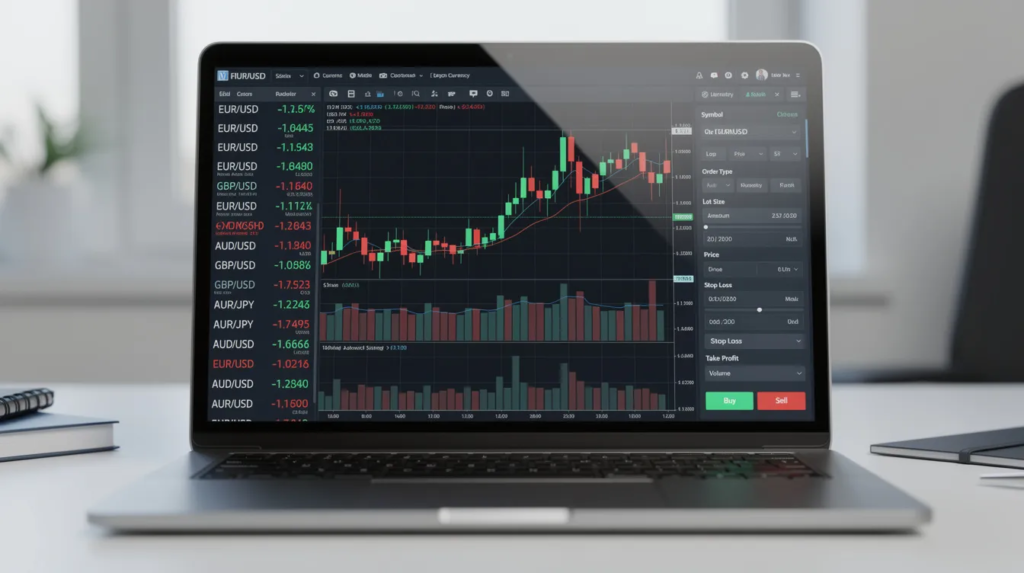
Many traders gravitate toward the forex market for scalping because it offers deep liquidity and tight spreads around the clock. Scalpers typically focus on heavily traded assets such as major currency pairs-EUR/USD, USD/JPY, GBP/USD-during active trading sessions.
Typical targets: 3–7 pips per trade
Typical stops: 2–5 pips
Key advantage: tight spreads, consistent liquidity
Focus on London and New York sessions for best setups
Index Futures Scalping
For instruments like Nifty, S&P 500 micro futures, or DAX, point values are higher, so stops and targets might be 2–6 index points. Monitor the economic calendar for high-impact releases that can cause erratic short term price movements.
Larger profit targets in dollar terms per contract
Margin requirements vary; account for overnight risk if holding through session breaks
The market depth display is particularly useful for reading institutional order flow
Stock Market Scalping
Limit scalping to highly liquid, large-cap names with strong volume and a narrow bid-ask spread in the stock market. Sudden news and trading halts make risk management more challenging than forex scalping.
Scalpers typically hold positions for seconds or minutes, which means you need reliable execution. Identifying high-volume assets is essential for scalping success. Successful scalping relies on fast execution and ultra-tight spreads, so broker selection matters.
Broker selection factors for scalping trading:
Low commissions per trade
Stable trading platforms with fast order routing
Reliable market depth data
ECN or direct market access preferred
Alternative High-Performance Scalping Strategies to Compare
While EMA + RSI + VWAP is the core template in this guide, many traders find that different approaches suit their temperament better. Here are three worth understanding:
VWAP Mean Reversion
Enter when price stretches to the 2nd standard deviation band around VWAP and shows a rejection candle. Target VWAP or the 1st band. A crypto scalping backtest using VWAP bounce setups showed a win rate of approximately 62% with R:R near 1:1. Best in range-bound conditions where price oscillates around the current price anchor.
Pure Moving Average Crossover
A shorter term trading strategy where a 5-period EMA crossing above a 20-period EMA triggers quick long entries during strong momentum moves. Scalping Breakouts capture profits from rapid price movements with this method. The drawback: frequent whipsaws in choppy markets make it less reliable as a standalone system. Scalpers can make over 100 trades in a day with crossover signals, but selectivity is crucial.
Order Flow / Tape Reading
An advanced approach using Level 2 data and Time & Sales to scalp 3–8 ticks when aggressive buying or selling surges appear. This requires more screen time, experience, and infrastructure but can extract edge where generic indicator strategies fail. Some scalpers report Liquidity Sweep strategies reaching approximately 72% win rate with R:R around 1:1.5 using this approach.
Test one primary scalping strategy deeply before layering alternatives for different market conditions. Spreading your attention across multiple systems before mastering one is a recipe for mediocrity.
Testing, Journaling, and Iterating Your Scalping Strategy
Even the best-designed scalping strategies fail without methodical testing and post-trade review. Scalping requires significant time commitment and focus, and that includes the preparation phase.
The 4–6 Week Paper Trading Phase
Before risking real capital, run this strategy on a demo account or paper trading mode:
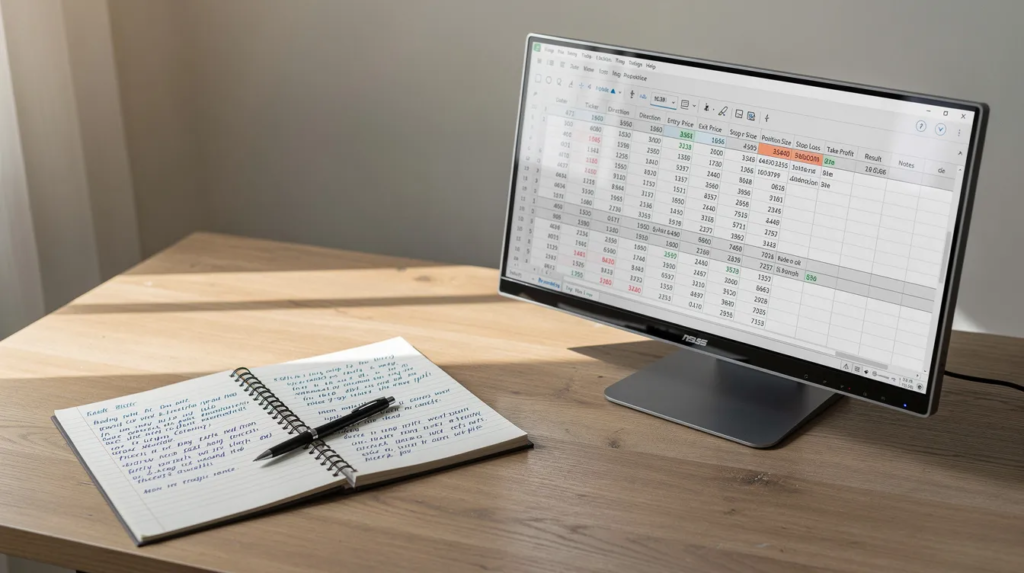
Log every trade: entry reason, stop placement, profit target, outcome, time of day, and spread at entry
Take screenshots of setups-both winners and losers
Track at least 200–300 trades before drawing conclusions
Frequent trading can lead to negative equity curves if your process has leaks you haven’t identified. Scalping can lead to high transaction costs due to frequent trading, and paper trading reveals whether your net expectancy survives after realistic cost assumptions.
Core Performance Metrics to Track
Metric | Target Range |
|---|---|
Win rate | 55–65% for 1:1 R:R setups |
Average winner / average loser | 1.0–1.5× |
Profit factor | ≥ 1.5 |
Max drawdown | < 5–8% of account |
Trades per day | 5–15 (quality filtered) |
Research on walk-forward optimization for EMA-based strategies shows that validating parameters against out-of-sample data and building in realistic transaction cost assumptions (break-even costs around 0.4% per transaction in some markets) significantly reduces drawdowns and improves real performance.
Incremental Adjustments Only
Make small tweaks: adjust RSI thresholds by 5 points, widen or tighten stops by 1 pip, test a different EMA pair. Never overfit to a tiny sample of 20–30 trades. Only scale position size after at least 200–300 trades show stable performance with realistic costs and slippage included.
Scalping is not recommended for novice traders due to its complexity. If you’re new, invest the testing phase seriously-it’s the difference between many successful trades and a blown account.
Frequently Asked Questions
The following questions address common practical concerns not fully covered in the main sections. Each answer is written for retail traders in plain language.
What timeframe is best for this EMA + RSI + VWAP scalping strategy?
Most frequent traders use 1-minute and 3-minute charts for entries, with occasional reference to a 5-minute chart for broader context. The 1-minute chart offers more setups but also more noise-short term price movements can trigger false signals more often. The 3-minute chart filters that noise but produces fewer trades per session.
If you’re just starting with this approach, begin on the 3-minute timeframe to avoid overtrading. Timeframes like the 15-minute are generally too slow for pure scalping but can help you define the broader intraday trend and overall market direction before zooming into short timeframes for execution.
How much starting capital do I realistically need to scalp in 2026?
For forex scalping on major pairs with micro lots, around $500–$1,000 is sufficient to practice with tiny risk per trade-risking $2–$5 per scalp. For index futures like S&P 500 micros or Nifty, margin requirements and tick values mean you’ll often need $3,000–$10,000 to manage risk properly and absorb normal drawdowns without being forced out of positions.
The critical number isn’t account size-it’s the percentage you risk per trade. Keeping risk at 0.25–0.5% per scalp trade ensures you can survive inevitable losing streaks without destroying your account, regardless of whether you start with $1,000 or $10,000. Many traders who scalp with larger profit targets in futures need proportionally larger accounts.
How long should a typical scalp trade last with this strategy?
Most trades using this approach last from 30 seconds to about 5 minutes on 1-minute charts, and up to 10–15 minutes on 3-minute charts. Scalping involves making numerous trades throughout a session, but each individual trade should resolve quickly.
If a trade hasn’t moved at least 50–70% toward your profit target within a few candles, consider exiting early or tightening your stop. The edge in scalping decays quickly, and holding longer effectively turns a scalp into a regular day trade with different risk characteristics. You need to exit trades quickly when the setup thesis breaks down.
Is this scalping strategy suitable for complete beginners?
While the rules are clear and mechanical, the fast pace and emotional pressure of scalping demands quick decision-making that can overwhelm beginners. Scalping is a short term trading strategy that requires familiarity with order types, chart reading, and platform execution before you can focus on strategy nuance.
Completely new traders should first learn basic chart patterns, order execution, and slower day trading or even longer term trading strategies. Once comfortable with those fundamentals, transition to demo scalping with this template for several weeks. Only move to a small live account after demonstrating consistent execution in paper trading. Your risk tolerance and emotional control will be tested heavily-know this going in.
What is a realistic profit expectation from scalping per month?
Consistently profitable scalpers might aim for low double-digit percentage returns per month on small accounts-5–15% is a commonly cited range-but actual results vary widely. Some months will be flat or negative due to changing market conditions, even with a strong edge in volatile markets.
Focusing on process metrics-following your rules, controlling risk, executing clean trades-produces better long-term results than chasing a fixed monthly target. No scalping strategy can guarantee profits every day. The traders who survive and compound are the ones who manage risk first and let small profits accumulate through many trades executed with discipline over time. Remember that scalping advantages like frequent opportunities only matter if your process prevents the handful of large losses that would otherwise wipe out all those small gains.