
The promise of passive income through automated forex trading has never been louder. Vendors and companies quickly appear sell trading systems that claim to turn beginners into profitable forex traders overnight. But are forex trading bots profitable in practice, or is the whole space a holy grail for trading systems that never delivers? This guide breaks down what forex trading robots actually do, what they cost, and whether they can realistically make you money in 2026.
Key Takeaways
Some forex trading bots can be profitable, but most off-the-shelf forex trading robots fail long term without careful testing, risk control, and active monitoring.
Profitability depends on the underlying strategy, market conditions, execution quality, and total costs including spreads, swaps, commissions, and forex robot cost.
Developing a customized forex trading system or adapting an existing forex trading bot often outperforms plug-and-play solutions heavily advertised online.
Beginners should treat forex bots as learning tools and start on a demo account before risking real capital.
Forex trading bots are best viewed as tools rather than shortcuts to wealth.
What Are Forex Trading Bots / Robots?
A forex trading robot automates currency trading by analyzing FX price data and automatically sending buy or sell orders to a broker. A forex trading bot analyzes trend signals, applies pre-defined rules, and manages positions without requiring human input at every step. In short, trading robots are automated software programs used to generate clear buy or sell data in the currency markets.
The forex trading robots definition covers several interchangeable terms: forex bots, Expert Advisors (EAs) on MetaTrader 4/5, cAlgo scripts on cTrader, and API-based systems built in Python or C#. Regardless of the label, the core trading robots definition functionality remains the same.
Core functionality includes:
24/5 market monitoring: Forex trading robots can operate 24 hours a day without breaks, covering Asian, London, and New York sessions continuously.
Technical indicator analysis: Bots calculate indicators like RSI, MACD, and moving averages in real time to generate trading signals.
Signal generation and execution: A forex trading bot analyzes trend signals and places orders automatically. Forex trading robots can execute trades in milliseconds, far faster than any human.
Position management: Automated stop-loss, take-profit, and trailing stops keep the trading process structured.
Most forex trading bots are built using MetaTrader and MQL scripting (MQL4 or MQL5), though cTrader’s cAlgo and custom Python APIs are also common. These automated software programs that generate trading signals follow strict pre-defined rules with no emotions, which is both their main strength and their core limitation. Forex robots minimize emotional trading decision biases, but they also cannot adapt to conditions they were never programmed for.
Are Forex Trading Bots Actually Profitable in 2026?
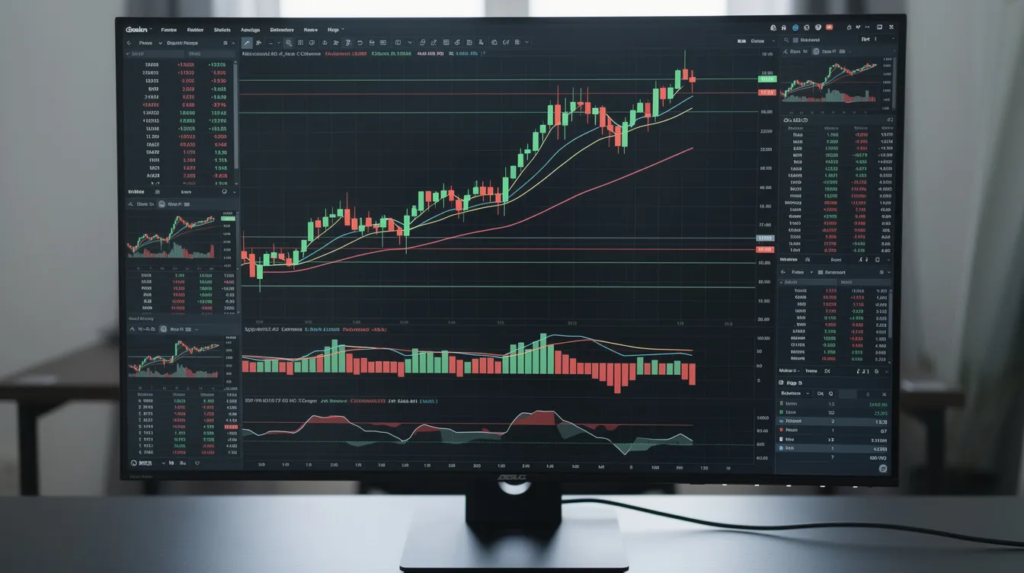
Yes, some forex trading bots can be profitable, but consistent long-term profitability is rare and demands careful design, testing, and oversight. Over half of forex transactions are executed through automated systems, yet data from independent reviews shows that 70–80% of retail algo traders lose money over multi-year periods. Only roughly 15–25% produce sustainable profits.
About 60% of retail traders using algo trading show positive annual returns in a given year, compared to just 5–10% of manual traders achieving the same. But forex trading robots can earn short-term profits while long-term performance remains inconsistent. Average success rates for forex robots range from 50% to 75%, and some top-performing robots claim win rates of 93%, though those numbers rarely survive real-world cost friction.
What shapes profitability:
Market regime: Trend-following bots thrive during strong directional moves but bleed in choppy markets. Mean-reversion strategies do the opposite.
Strategy type: Grid and martingale bots show high win rates until a sharp trend wipes out months of gains. One ML-augmented grid strategy on EUR/USD produced ~442% annual return but suffered nearly 80% equity drawdown.
Risk per trade: Excessive leverage and poor risk management can quickly deplete a trading account.
Realistic expectations: experienced traders may see 15–25% annual returns from forex bots, while beginners might expect 5–15% annual returns. Claims like “1% per day” are almost always marketing hype. Understanding why bots succeed or fail helps set realistic trading expectations. Traders should judge bots by long, verified live performance across at least 6–12 months rather than one-off backtests or screenshots.
How Forex Trading Robots Work: Definition, Functionality, and Costs
To judge whether automated forex trading robots are worth the investment, you need to understand their definition functionality and costs explained in practical terms. Here is how forex trading robots operate step by step:
Data feed intake: The bot receives tick or price bar data from the broker platform.
Indicator calculation: It computes values for technical setups like moving average crossovers, RSI overbought/oversold zones, or Bollinger Band breakouts.
Signal rules: If conditions are met (if/then logic), the bot lets traders generate trading signals and place orders.
Order execution: Robots can execute trades in milliseconds, faster than human traders, through MT4/MT5 or broker APIs.
Position management: Stop-loss, take-profit, trailing stops, and sometimes grid or martingale position sizing manage the open trade.
Many forex trading robots may use popular setups like moving average crossovers, RSI filters, or volatility breakout logic around scheduled events. These programs used to generate signals are only as good as their underlying rules and cost management.
Main cost components:
Upfront forex robot cost: Mass-market EAs typically run $50–$500; niche or premium systems cost $1,000+.
VPS hosting: $10–$40 per month for reliable 24/5 operation; premium low-latency setups run $60+ per month.
Broker spreads and commissions: Raw ECN spreads on EUR/USD sit at 0.0–0.3 pips plus ~$6–7 per standard lot round-turn. Standard accounts charge ~1.0–1.5 pips with no commission.
Swap fees: Overnight positions incur swap costs of roughly −$0.97 to −$1.19 per lot on major pairs.
Some “free” forex trading robots online are monetized through broker partnerships with wider spreads or copy-trading revenue shares. These hidden costs quietly reduce profitability for the user.
Pros and Cons of Automated Trading with Forex Bots
Automated trading with forex bots has clear structural advantages, but serious risks directly affect whether the trading software delivers profit or loss.
Pros:
Forex trading bots operate 24 hours a day across all major sessions without fatigue.
Bots aim to eliminate emotional trading decision biases, removing fear and greed from trading decisions.
They react to price movements in milliseconds, capturing opportunities humans would miss.
You can trade multiple currency pairs simultaneously-EUR/USD, USD/JPY, GBP/JPY-and backtest on historical data spanning 2010–2025.
Cons:
Robots cannot adapt to unexpected market changes. Bots cannot adapt to sudden geopolitical shifts or news events like surprise rate hikes or currency interventions.
Technical failures can disrupt trading performance of bots-VPS downtime, platform crashes, or connectivity drops.
Over-optimisation can lead to poor real-world performance. A strategy that looks flawless in backtest data often collapses when real spreads, slippage, and changing volatility enter the picture.
Overtrading magnifies transaction costs, turning a marginally profitable system into a losing one.
Grid and martingale forex trading robots that appear profitable for months can wipe an account during a sharp one-way trend, such as the USD/JPY surges seen in 2022–2024.
Profitability is ultimately a balance between these structural pros and cons, and the trader’s ability to manage them actively.
Types of Forex Trading Bots and Their Profitability Profiles
Not all automated trading strategies behave the same. Profitability odds vary significantly by strategy category, and many forex traders prefer choosing a type that matches their risk tolerance.
Trend-following bots ride directional moves on pairs like EUR/USD or XAU/USD. Win rates tend to sit around 40–50%, but winners are 2–3× larger than losers. They suffer during choppy, range-bound markets but can capture strong dollar strength cycles. Optimal market conditions enhance the profitability of these bots significantly.
Mean-reversion bots fade short-term spikes around key levels. Win rates reach 55–65%, but reward per trade is smaller. They are vulnerable during breakouts yet offer steady returns in range-bound conditions.
Grid and martingale bots stack positions as price moves against them, often showing 80–95% win rates. The catch: rare, catastrophic losses erase months of profits. Profitable bots prioritize capital preservation with strict risk management rules-martingale systems do the opposite.
News and volatility breakout bots trade around FOMC decisions, ECB meetings, or US NFP releases. Execution quality and slippage heavily shape profitability. Spread widening during these events can turn a winning signal into a loss.
AI/ML-based bots use ensemble models or fuzzy logic to detect regime shifts. They offer higher adaptability in theory, but overfitting occurs when bots perform well in backtesting but fail in live markets.
Match bot type to your risk tolerance, time horizon, and ability to supervise trades rather than chasing the highest historical win rate.
Developing a Customized Forex Trading System vs Buying a Bot
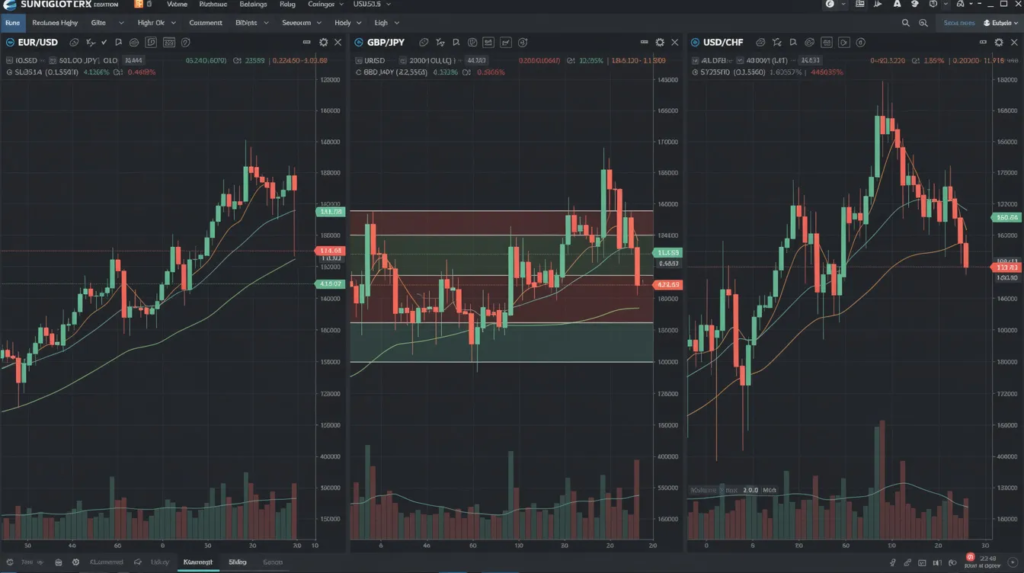
Off-the-shelf forex trading robots are often black boxes with fixed rules and vendor lock-in. Many forex traders prefer developing a customized forex trading system tailored to their own logic and risk profile. Writing custom trading strategies gives you transparency that buying a bot never can.
Benefits of building your own:
Full control over rules and parameters-no hidden martingale or grid logic.
Ability to tweak as markets evolve, which is critical since profitable bot users adjust their algorithms as market conditions fluctuate.
Elimination of vendor lock-in and hidden fees.
Practical paths for forex traders prefer developing their own systems:
Code EAs in MQL4/MQL5 for MetaTrader.
Use cTrader’s cAlgo with C# scripting.
Build Python-based APIs connected to major FX brokers.
Recommended workflow: start with a manual strategy on a demo account, encode logic into an EA, backtest on at least 5–10 years of data, then forward-test on demo for several months. A successful bot should be based on a strong foundational strategy. Rigorous testing of strategies is crucial for successful forex trading bots. Successful bots undergo rigorous forward testing in live market environments before real capital is deployed. Expect a 3–6 month testing phase before going live.
The learning curve-basic programming, understanding slippage, managing drawdowns-is steeper but often results in more robust automation than buying black-box forex trading robots online.
What Does a Forex Robot Cost in Practice?
Forex robot cost includes both the purchase price and ongoing operating expenses that eat into returns. Here is what to budget:
Commercial EAs: Typical mass-market bots sell for $99–$299 one-time. Premium bots with license tiers range from $500 to $2,000. Subscription models run $30–$200 per month.
VPS hosting: Forex trading bots should operate on fast and reliable VPS to minimize latency. Using a Virtual Private Server can enhance bot performance. Entry-level hosting costs $10–$40 per month; premium setups near broker data centers run $60+.
Broker costs: Spreads ($1.0–1.5 pips on standard accounts or 0.0–0.3 pips plus commission on ECN), swap fees for overnight positions, and potential slippage around news events.
Hidden costs: Signal subscriptions, copy-trading platform fees, and wider spreads on “bot-friendly” broker accounts.
Practical example: If a trader generates 15% gross annual return but spends 5–7% on combined trading costs (commissions, spreads, swap, VPS, and software), net profitability drops to single digits. Many forex trading robots may appear profitable on paper but deliver thin margins after all costs.
Best Practices for Using Forex Trading Bots Safely
Disciplined process is what converts a potentially profitable forex trading bot into a sustainable tool rather than a short-lived experiment.
Start on a demo account for at least 1–3 months. Observe bot behavior across different sessions and during news events before risking real capital. Using pre programmed bots on demo first reveals weaknesses that backtests hide.
Set strict risk controls: Cap lot sizes, enforce maximum daily loss limits of 1–3% of account, limit total open trades, and disable martingale unless you fully understand the risk. Excessive leverage and poor risk management can quickly deplete a trading account.
Monitor constantly. Traders should monitor their forex bots regularly for performance, even with fully automated systems. Check logs daily, verify stops are placed, and pause bots during major unscheduled events. Regular maintenance and updates are necessary for forex trading bots.
Diversify across strategies and timeframes. Don’t put all capital into a single bot. Mix trend-following with mean-reversion, spread across pairs.
Review at fixed intervals (every 30, 60, or 90 days). Measure net return, drawdown, win rate after costs, and profit factor. This is among the legitimate systems for assessing risk in your portfolio.

How to Spot Forex Robot Scams and Overhyped Bots
The forex robot market is flooded with scams. Many commercial forex bots are scams that promise guaranteed profits. Companies quickly appear sell trading systems with flashy marketing, then vanish. Recognizing the red flags is essential to preserving capital.
Guaranteed profits or zero risk: Scams often promise guaranteed profits or zero risk. No legitimate automated system can guarantee monthly income. Any vendor promoting a develop a failproof money making system approach is lying.
Unrealistic equity curves: Smooth, upward-only graphs with no drawdowns. Real trading always involves losing periods.
High-pressure sales tactics are a common red flag-limited-time offers, countdown timers, urgent language.
Missing trading history is a warning sign. Legitimate robots provide verified results on independent platforms like Myfxbook or FX Blue, with at least 6–12 months of live data.
Cherry-picked results: Vendors cherry pick successful trades or start backtests right after major crises to inflate performance numbers. Fake reviews often mislead potential buyers into trusting unverified claims.
Treat any forex bot as guilty until proven innocent by your own demo testing, stress-testing through volatile months, and checking behavior during events like NFP or CPI releases. Robot traders should verify every claim independently.
Should Beginners Use Forex Trading Bots?
Since 2020, retail FX participation has surged, and many beginners are attracted to hands-off profits from automated forex trading robots. The idea of passive income through trading software is appealing, but it comes with serious caveats.
Beginners can benefit from forex bots as educational tools. Watching how a rule-based automated system enters and exits trades teaches how risk management works, how drawdowns feel, and how market trends affect results. It is a practical way to help traders limit emotional decisions while learning the ropes, and bots aim to eliminate emotional trading helping traders focus on data.
But relying solely on bots without understanding basic forex trading concepts-pips, leverage, margin-often leads to blown accounts. No forex trading bot replaces the need for ongoing education.
A staged approach works best:
Learn manual trading basics first.
Experiment with demo automation for 1–3 months.
Allocate a small portion (10–20%) of capital to live automated trading.
Keep the rest in lower-risk setups or manual strategies.
No trading bot can substitute for skill, discipline, and realistic expectations about profits and losses. Personalized ai powered answers from trading communities can help, but education remains your best investment.
Conclusion: When Can a Forex Trading Bot Be Profitable?
Forex trading bots are tools, not magic money machines. Profitability is possible but conditional and far from guaranteed.
Success hinges on a sound underlying edge, realistic risk controls, low frictional costs, robust testing across multiple years and regimes, and consistent human oversight.
View forex bots as a way to systematize a strategy you already understand rather than a shortcut. Buy automated forex trading robots only after exhaustive due diligence-or better yet, build your own.
As of 2026, improvements in algorithmic infrastructure and retail access make it easier than ever to build or customize bots. But financial markets remain subject to uncertainty, and no algorithm fully eliminates risk.
Frequently Asked Questions
Can a forex trading bot guarantee profits every month?
No. No forex trading bot can guarantee monthly profits regardless of marketing claims. FX markets are affected by unpredictable events such as surprise central bank decisions, geopolitical tensions, and flash crashes. Even institutional algorithmic funds with sophisticated models experience losing months. Any promise of “guaranteed income” or “no losing months since launch” should be treated as a major red flag. There is no failproof money making system in financial markets.
How much capital do I need to start using a forex trading robot?
Micro accounts from $100–$500 work for initial learning and testing on a demo account. Realistic live bot deployment typically starts around $1,000–$5,000, depending on lot sizes and broker requirements. Running costs like VPS, spreads, and commissions mean that very small accounts may struggle to show meaningful gains after expenses. Never deposit more than you can afford to lose, even when using a seemingly stable automated trading system.
Do I need programming skills to use or create a forex trading bot?
No-code and low-code options exist, including drag-and-drop strategy builders and visual block editors. However, learning MQL4/MQL5, Python, or C# for cAlgo gives much more flexibility to build and maintain a customized forex trading system. If you have long-term ambitions in automated trading, gradually developing basic scripting skills will help you understand, debug, and improve your own bots over time.
Can a forex trading robot trade other assets like stocks or cryptocurrency?
Some platforms are FX-specific, but many algorithmic frameworks can trade cryptocurrency, indices, and commodities. Bots originally developed for EUR/USD trend-following have been ported to BTC/USD or ETH/USD on CFD platforms, with mixed results. Each asset class has its own volatility, liquidity, and fee structure. A profitable forex bot won’t automatically remain profitable if you trade cryptocurrency or other markets without re-testing and re-calibrating.
How long should I test a forex bot before going fully live?
Start with backtesting over at least 5–10 years of historical data, followed by 1–3 months of demo forward-testing in real-time conditions. Then deploy a small live allocation for another 1–3 months while monitoring maximum drawdown, win rate after costs, and average trade duration. Skipping this testing pipeline greatly increases the risk that an apparently profitable forex trading robot fails once real money and a sell a currency pair decision is involved.