
The financial landscape is shifting rapidly as we approach 2026. Many investors feel overwhelmed by the sheer number of opportunities available in today’s global economy. Choosing the right path requires a clear understanding of your personal goals and your comfort with risk.
Whether you are a seasoned professional or just starting your journey, finding the best market to trade is essential for long-term success. Every asset class offers unique advantages that can help you build wealth if you align them with your strategy.
Navigating these choices might seem daunting, but clarity is within reach. We will explore the nuances of Crypto vs Forex vs Stocks to help you identify the best market for beginners 2026. By comparing these dynamic sectors, you gain the confidence to make informed decisions that serve your financial future.
Prepare to unlock your potential and master the markets that define our modern era. Your journey toward financial independence starts with the right choice today.
Understanding the Landscape of Financial Markets
The landscape of modern finance is a vast ecosystem where digital assets and traditional exchanges coexist. To succeed, investors must perform a thorough trading market comparison to identify which environment aligns with their personal goals. Every market operates on its own set of rules, creating a unique space for growth and discovery.
Overview of Trading Markets
Global financial markets serve as the backbone of the world economy, connecting buyers and sellers across borders. While traditional stock exchanges rely on centralized authorities to verify transactions, the crypto space thrives on decentralized blockchain technology. This fundamental difference shapes how participants interact with their assets daily.
Understanding these structures is essential for any trading market comparison. Whether you are looking at the regulated environment of the New York Stock Exchange or the 24/7 nature of digital currency platforms, the underlying mechanics dictate your potential success. Each system offers a distinct path for those ready to embrace the future of finance.
Key Characteristics of Each Market
Every market possesses specific traits that define the trader’s experience. Stocks are often viewed as long-term wealth builders, while the Forex market provides high liquidity for those seeking rapid currency fluctuations. Cryptocurrencies, meanwhile, offer unparalleled accessibility, allowing anyone with an internet connection to participate in a global network.
When conducting a trading market comparison, consider how these characteristics impact your risk tolerance. Some markets prioritize stability and regulatory oversight, whereas others favor innovation and high-speed movement. By recognizing these core differences, you can confidently navigate the complexities of the financial world and build a strategy that truly works for you.
The Rise of Cryptocurrency
Investors today are witnessing a historic shift as blockchain technology paves the way for a new asset class. This digital evolution has moved beyond niche experimentation to become a cornerstone of modern finance. By removing intermediaries, these assets offer a transformative way to manage wealth.
Exploring Popular Cryptocurrencies
Bitcoin remains the primary digital gold, serving as a store of value for millions. Meanwhile, Ethereum has expanded the horizon by enabling smart contracts and decentralized applications. When analyzing forex vs crypto, traders often find that digital assets offer unique utility beyond simple currency exchange.
Benefits of Trading Cryptocurrencies
One of the most compelling advantages is the 24/7 market availability, which never sleeps. Unlike traditional exchanges, crypto allows for global participation at any hour of the day. This constant liquidity provides unmatched flexibility for active traders looking to capitalize on global news cycles.
Risks and Challenges in Crypto Trading
Despite the high-growth potential, the market remains notoriously volatile. When comparing stocks vs crypto, it is clear that digital assets carry a higher risk profile due to regulatory uncertainty and price swings. Investors must prioritize robust security measures to protect their holdings from potential threats.
Success in this space requires a disciplined approach to risk management. Distinguishing between speculative hype and long-term value is essential for any serious participant. By staying informed, you can navigate these challenges with greater confidence and clarity.
Forex Trading: A Global Perspective
Stepping into the world of forex trading offers a unique window into the heartbeat of the global economy. As the largest and most liquid financial arena on the planet, it provides an unparalleled environment for those ready to engage with international finance. When evaluating forex vs crypto, many traders find that the sheer scale of the currency market offers a sense of stability and depth that is hard to replicate elsewhere.

How Forex Works
At its core, the foreign exchange market involves the simultaneous buying of one currency and the selling of another. These are traded in currency pairs, such as the EUR/USD or GBP/JPY, reflecting the relative value of two different national economies. Price movements are driven by complex macroeconomic factors, including interest rate decisions, inflation reports, and geopolitical shifts.
Because this market operates 24 hours a day, five days a week, it allows participants to react to global news in real-time. This constant flow of information ensures that the market remains dynamic and responsive to the changing tides of international trade. Understanding these mechanics is essential for anyone looking to master the art of currency speculation.
Advantages of Forex Trading
One of the primary reasons traders flock to this market is the availability of high leverage. This feature allows individuals to control larger positions with a relatively small amount of capital, potentially magnifying gains. Furthermore, the immense liquidity ensures that orders are executed quickly, even during periods of high market activity.
When considering forex vs crypto, the established nature of the forex market often appeals to those who prefer a more regulated and predictable environment. The ability to trade major currencies provides a sense of security that is deeply rooted in the strength of global central banks. This accessibility makes it a favorite for both novice and experienced traders alike.
Common Risks in Forex Markets
While the opportunities are vast, it is vital to acknowledge the inherent risks involved in currency trading. The same leverage that can amplify profits can also lead to significant losses if a trade moves against your position. Market volatility, while often lower than in digital assets, can still be triggered by unexpected economic data or sudden political events.
Successful traders must prioritize risk management to protect their capital from these unpredictable swings. By maintaining a disciplined approach and staying informed about global trends, you can navigate the complexities of the market with confidence. Always remember that informed decision-making is your best defense against the challenges of the global financial landscape.
The Traditional Stock Market
While newer digital assets often dominate headlines, the traditional stock market continues to provide a reliable foundation for long-term wealth creation. Many investors find that comparing stocks vs crypto reveals distinct differences in how these assets generate value over time. By purchasing shares, you are essentially buying a piece of a company and participating in its future success.
Basics of Stock Trading
At its core, stock trading involves buying and selling shares of publicly traded companies on exchanges like the NYSE or NASDAQ. Investors often analyze market capitalization to determine the size and stability of a firm. Furthermore, many established companies reward their shareholders through dividends, which provide a steady stream of passive income.
Pros of Investing in Stocks
One of the primary advantages of equity investing is the potential for compounded growth over several decades. Unlike more speculative assets, blue-chip stocks represent ownership in businesses with proven track records and tangible assets. This inherent stability makes them a preferred choice for those seeking to build a diversified portfolio that can withstand various economic cycles.
Cons and Risks of Stock Investments
Despite their benefits, stocks are not immune to market fluctuations or broader economic downturns. Investors must be prepared for periods of volatility, where share prices may drop due to poor earnings reports or geopolitical instability. When evaluating stocks vs crypto, it is important to remember that while stocks are generally more regulated, they still carry the risk of capital loss if a company fails to perform.
Comparing Liquidity in Crypto, Forex, and Stocks
When you evaluate the Crypto vs Forex vs Stocks landscape, liquidity stands out as the most vital metric for your success. It represents the ease with which you can buy or sell an asset without causing a major shift in its price. Mastering this concept is the first step toward becoming a confident and efficient trader.
Definition of Liquidity in Markets
Liquidity is essentially the lifeblood of any financial exchange. It measures how quickly an asset can be converted into cash while maintaining a stable market value. High liquidity ensures that your orders are filled almost instantly, which is crucial during periods of high market volatility.
When a market lacks liquidity, you might face “slippage,” where the price changes between the time you place an order and the time it executes. Reliable order fulfillment is what separates professional traders from those who struggle with unexpected costs.
Liquidity Levels Across Different Markets
A thorough trading market comparison reveals that these three sectors operate with very different levels of depth. The Forex market is widely considered the most liquid in the world, as it involves the constant exchange of global currencies. This massive volume typically results in tighter spreads and lower transaction costs for participants.
The stock market also offers high liquidity, especially for large-cap companies listed on major exchanges like the NYSE. However, liquidity can dry up quickly for smaller, penny stocks. Meanwhile, the cryptocurrency market is evolving rapidly; while major coins like Bitcoin enjoy deep liquidity, smaller altcoins can experience significant price swings due to thinner order books.
Volatility: A Double-Edged Sword
Volatility acts as a powerful engine that drives potential gains for those who know how to navigate it. While many fear sudden price shifts, seasoned traders view these movements as essential opportunities to grow their portfolios. Mastering the art of reading market swings is the key to turning uncertainty into a consistent advantage.
Understanding Market Volatility
Market volatility measures the speed and magnitude of price changes over a specific period. When prices swing wildly, the potential for high returns increases, but so does the risk of significant loss. Risk management becomes your most valuable tool during these intense periods of market activity.
To thrive, you must adapt your strategy to the current environment. Traders often use indicators like the Average True Range (ATR) to gauge how much an asset typically moves. By staying disciplined, you can protect your capital while capturing the momentum of a trending market.
Comparing Volatility in Crypto vs Forex vs Stocks
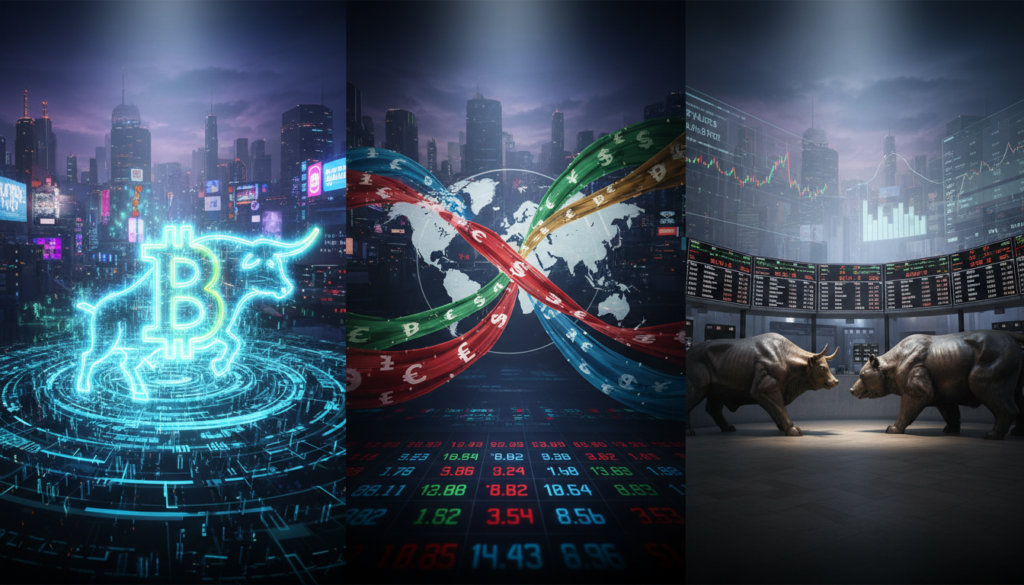
When analyzing Crypto vs Forex vs Stocks, the differences in historical behavior become clear. Cryptocurrency markets are known for extreme, rapid price swings that can happen at any hour of the day. This high-octane environment attracts those looking for explosive growth, though it requires a strong stomach for risk.
In contrast, the Forex market typically exhibits lower volatility, driven by global economic news and interest rate shifts. It offers a more structured environment, making it a favorite for traders who prefer technical precision over wild speculation. Stocks often fall somewhere in the middle, with volatility usually tied to corporate earnings and broader market sentiment.
Ultimately, choosing between Crypto vs Forex vs Stocks depends on your personal risk tolerance and goals. Whether you seek the rapid pace of digital assets or the steady rhythm of traditional equities, understanding these patterns is vital. Embrace the volatility, and you will find the path to becoming a more confident and capable trader.
Regulatory Environment for Each Market
Every successful trader knows that legal compliance is the bedrock of long-term wealth preservation. Navigating the complex web of financial laws allows you to protect your hard-earned capital while ensuring your participation in the market remains secure. By staying informed about shifting government policies, you gain the confidence to trade in an ever-changing global landscape.
Crypto Regulations and Compliance
The digital asset space is currently undergoing a massive transformation as governments worldwide establish clearer rules. In the United States, agencies like the Securities and Exchange Commission (SEC) and the Commodity Futures Trading Commission (CFTC) are actively shaping how tokens are classified and traded. This evolution is a positive sign, as it brings much-needed transparency and investor protection to a once-wild frontier.
Traders should prioritize platforms that demonstrate a commitment to anti-money laundering (AML) and know-your-customer (KYC) protocols. Engaging with compliant exchanges reduces the risk of sudden service disruptions. Embracing these standards is not just about following the law; it is about securing your future in the decentralized economy.
Forex Market Regulations
The foreign exchange market operates on a massive global scale, requiring robust oversight to maintain integrity. In the United States, the National Futures Association (NFA) and the CFTC serve as the primary watchdogs for retail forex participants. These organizations ensure that brokers maintain adequate capital and provide fair execution for their clients.
Choosing a regulated broker is the most important decision you can make to safeguard your funds. Regulated entities are held to strict standards, which helps prevent fraudulent practices and ensures your trades are handled with professional care. Always verify the registration status of your broker to trade with total peace of mind.
Stock Market Oversight
The traditional stock market is perhaps the most heavily regulated financial environment in the world. The Securities and Exchange Commission (SEC) and the Financial Industry Regulatory Authority (FINRA) work tirelessly to ensure that markets remain fair and efficient. Their oversight provides a safety net that allows investors to focus on long-term growth strategies.
This rigorous framework requires companies to disclose financial information regularly, giving you the data needed to make informed decisions. By operating within this structured environment, you benefit from institutional-grade protections that have been refined over decades. Trusting in these established systems allows you to build your portfolio with unwavering confidence.
Technical Analysis vs Fundamental Analysis
Deciding which market is most profitable requires a deep dive into the two primary methods of price prediction. Professional traders often combine these distinct approaches to gain a clearer picture of where asset prices might head next. By mastering both, you can transform your trading journey from guesswork into a calculated strategy.
What is Technical Analysis?
Technical analysis focuses on the study of historical price action and volume data. Traders use charts and mathematical indicators to identify recurring patterns that suggest future movements. It is a powerful tool for those who prefer to react to market momentum rather than long-term economic shifts.
By analyzing trends, support levels, and resistance zones, you can time your entries and exits with precision. This method is particularly popular in fast-moving environments where price action happens in seconds or minutes. Technical indicators act as your compass in the chaotic sea of daily market fluctuations.
Understanding Fundamental Analysis
Fundamental analysis takes a different approach by evaluating the intrinsic value of an asset. This involves looking at macroeconomic factors like interest rate decisions, geopolitical events, and corporate earnings reports. Investors who look at the big picture often find this method essential for long-term success.
When you examine the health of a company or the strength of a national economy, you are performing fundamental research. This data helps you determine if an asset is currently undervalued or overvalued. Strong fundamentals provide the foundation for sustainable growth in your portfolio.
Which Analysis is Best for Which Market?
Choosing the right tool depends on the asset class you are trading. For example, crypto markets often respond heavily to sentiment and technical patterns, while forex is deeply tied to interest rate differentials. Stocks, however, rely heavily on the underlying financial performance of the issuing company.
The most successful traders integrate both methodologies to identify which market is most profitable at any given time. By using fundamental analysis to pick the right asset and technical analysis to time the trade, you create a balanced approach. Embrace this dual strategy to navigate the complexities of 2026 and beyond with confidence.
The Role of Technology in Trading
The modern trading landscape is defined by rapid technological innovation that empowers every investor. You no longer need a seat on a major exchange to participate in global finance. Today, sophisticated tools are available at your fingertips, leveling the playing field for retail participants.
Finding the best market for beginners 2026 requires an understanding of how these digital advancements function. By leveraging the right software, you can transform your approach from guesswork to data-driven decision-making.
Automated Trading Systems
Automated trading systems, often called algorithmic trading, allow you to execute orders based on pre-set rules. These systems remove the emotional burden of trading by following strict logic rather than impulse. You can set specific entry and exit points that the computer monitors around the clock.
This technology ensures that you never miss a market move while you are away from your screen. Consistency is the primary advantage of using these automated bots in your daily routine.
Impact of Artificial Intelligence
Artificial Intelligence has brought a new level of depth to market analysis. AI-driven platforms can process vast amounts of historical data to identify patterns that remain invisible to the human eye. These tools provide predictive insights that help you anticipate potential price shifts before they occur.
By integrating AI into your strategy, you gain a significant competitive edge in volatile environments. It acts as a personal analyst that works tirelessly to refine your understanding of market trends.
Using Trading Platforms Effectively
Modern trading platforms are designed to be intuitive, yet they offer powerful features for those willing to learn. To succeed, you must master the interface and utilize the built-in educational resources provided by your broker. Many platforms now offer paper trading accounts, which allow you to practice without risking real capital.
Choosing the best market for beginners 2026 is easier when you utilize these simulation tools to test your theories. Always prioritize platforms that offer robust security and real-time data feeds to ensure your success in this digital era.
Investment Strategies for Each Market
Whether you are eyeing crypto, forex, or stocks, your roadmap to wealth starts with a solid plan. Many new traders often ask which market is most profitable, but the truth is that success depends more on your personal strategy than the asset class itself. Developing a disciplined approach allows you to navigate market fluctuations with clarity and purpose.
Long-Term vs Short-Term Trading
Choosing between short-term gains and long-term growth is a fundamental decision for every investor. Short-term trading, such as day trading, requires intense focus and quick decision-making to capitalize on small price movements. This style can be exhilarating but demands a high tolerance for stress.
Conversely, long-term investing focuses on the power of compounding over several years. By holding assets through market cycles, you can build substantial wealth with less daily monitoring. Consistency is the secret ingredient for those who prefer a more relaxed approach to their financial future.
Diversification Strategies
Spreading your capital across different asset classes is a proven way to protect your portfolio. You might wonder which market is most profitable when building a diversified plan, but the best answer is to combine them. By holding a mix of stocks, currencies, and digital assets, you reduce the impact of a downturn in any single sector.
True diversification goes beyond just picking different assets. It involves balancing your exposure to high-risk, high-reward opportunities with stable, income-generating investments. This balanced approach ensures that your overall portfolio remains resilient against unexpected market shifts.
Risk Management Techniques
Protecting your capital is the most important rule in any financial environment. Implementing strict stop-loss orders allows you to exit a trade automatically if the price moves against your prediction. This simple tool prevents small losses from turning into devastating financial setbacks.
Additionally, mastering position sizing is essential for long-term survival. Never risk more than a small percentage of your total account on a single trade. By keeping your risk exposure low, you ensure that you have the staying power to recover from losses and continue growing your wealth over time.
The Future of Trading: Crypto, Forex, and Stocks
The global financial landscape shifts rapidly as digital assets merge with traditional banking systems. You stand at the edge of a new era where technology empowers individual investors to reach their goals. Choosing the best market to trade requires a clear vision of your personal financial objectives.
Predictions for 2026 and Beyond
Institutional adoption of blockchain technology will likely bridge the gap between legacy stock exchanges and decentralized finance. Expect platforms like Coinbase and Interactive Brokers to offer more integrated services for diverse portfolios. This evolution creates unique opportunities for those who adapt to changing market conditions.
Emerging Trends to Watch
Artificial intelligence now drives predictive modeling for retail traders. Real-time data analysis helps you identify the best market to trade based on current global economic shifts. Keep a close eye on regulatory updates from the Securities and Exchange Commission to protect your capital.
Preparing for Market Changes
Success in modern trading demands constant learning and disciplined risk management. Build a strategy that balances innovation with proven financial principles. Your commitment to staying informed remains the most powerful tool in your investment journey.